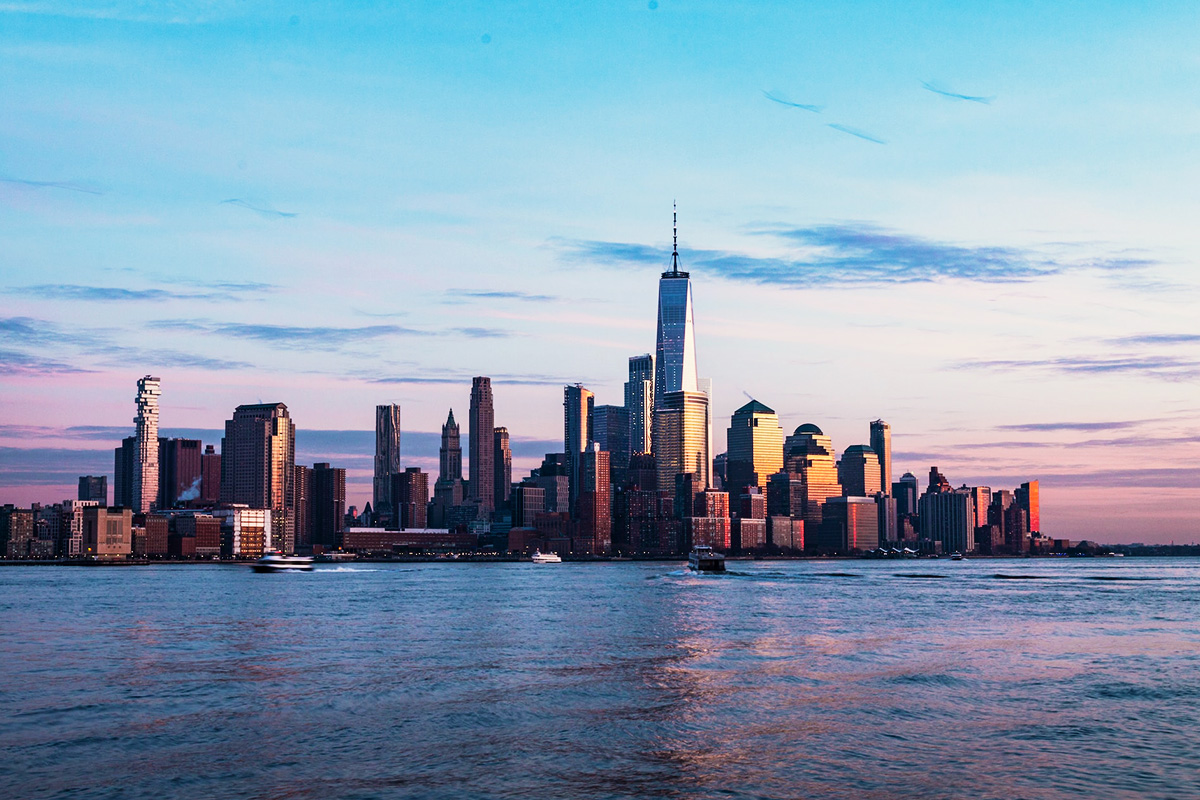
The strongest coastal cities do more than face the water. The ocean changes their weather, their streets, their food and the way a visitor moves through them.
There are cities built beside water, and there are cities whose daily life has been rearranged by it. In Sydney, ferries cross the harbor while surfers wait beyond the headlands. In Rio de Janeiro, the beach is a public room running along the front of the city. In San Francisco, the Pacific arrives as fog, cold current and a horizon that feels wilder than the streets behind it.
Those are the places I mean by cities by the ocean. The sea should not be a technicality on a map or a beach reached only after a long excursion. It should alter the experience of the city.
My ten choices are Sydney, Rio de Janeiro, Cape Town, Honolulu, Barcelona, Miami and Miami Beach, San Francisco, Nice, Lisbon and New York City. They are not ranked by luxury, nightlife or the color of the sand. I chose them for the strength of the relationship between city and coast—and because each offers a genuinely different kind of trip.
The best cities by the ocean at a glance
| City | Water setting | Best for | Beach relationship | Best general period | Main compromise |
|---|---|---|---|---|---|
| Sydney | South Pacific, Tasman Sea and a vast natural harbor | The strongest all-round city-and-beach trip | Ocean beaches and harbor coves are part of city life | March–May; September–November | Large and geographically spread out |
| Rio de Janeiro | South Atlantic | Urban beach culture and dramatic landscape | Copacabana and Ipanema sit directly against dense neighborhoods | May–October for milder conditions | Heat, crowds and neighborhood planning require care |
| Cape Town | Atlantic coast and False Bay | Mountains, beaches and visual drama | Several distinct coasts rather than one central beach | November–March for warmer, drier days | Atlantic water is cold; distances add up |
| Honolulu | Central Pacific | A genuinely ocean-first city holiday | Waikīkī puts swimming and surfing inside the urban core | Year-round; May–October is generally drier | High costs and intense visitor pressure in Waikīkī |
| Barcelona | Mediterranean Sea | Art, architecture, food and an accessible city beach | Sand and promenade are close to the historic center | May–June; September–October | Busy beaches; it faces a sea, not the open ocean |
| Miami and Miami Beach | Atlantic Ocean and Biscayne Bay | Warm water, long sand and Art Deco city life | Miami Beach is a barrier-island city directly on the Atlantic | December–April | Heat, humidity and hurricane-season risk in summer and fall |
| San Francisco | Pacific Ocean, bay and Golden Gate | Rugged coast, fog and long waterfront walks | The coast is spectacular but usually not a swimming destination | September–October often brings the mildest weather | Cold water, rip currents and rapidly changing conditions |
| Nice | Mediterranean Sea, Baie des Anges | A walkable European city beside luminous water | The pebble shore and promenade form the city’s front edge | May–June; September | Pebbles rather than sand; summer is crowded |
| Lisbon | Tagus estuary opening to the Atlantic | History, food and Atlantic beaches as day trips | The city faces the estuary; ocean beaches begin beyond the center | May–June; September–October | The best surf beaches are not in the historic core |
| New York City | Atlantic coast, New York Harbor and tidal waterways | Harbor history plus the largest cultural city break | Real public ocean beaches exist, but not beside Midtown | May–June; September–October | Reaching the beach takes time; swimming is seasonal |
If the beach must be outside the hotel door, start with Honolulu, Miami Beach or Rio. If the coast matters more than swimming, choose Cape Town or San Francisco. For a European city break where museums, food and urban life remain the priority, Barcelona, Nice and Lisbon are stronger fits.
What counts as a city by the ocean?
The phrase is useful, but it is not precise geography. NOAA distinguishes oceans from seas by noting that seas are generally smaller and partly enclosed by land. The Mediterranean is therefore a sea connected to the Atlantic, while Tokyo Bay and New York Harbor are coastal waters connected to the Pacific and Atlantic respectively. In ordinary travel language, however, “ocean city” and “seaside city” often overlap.
I use three tests:
- The city must have a meaningful physical connection to salt water. A beach two hours away does not automatically make a city coastal.
- The water must affect the trip. Ferries, promenades, ocean weather, working harbors, surf culture or public beaches should be part of the place rather than an incidental edge.
- It must function as a city. Santorini is an island; Oia is a village. Both are beautiful coastal destinations, but neither is a large coastal city.
This broader definition allows Barcelona and Nice into the list as Mediterranean cities, Lisbon as a city at the mouth of an Atlantic estuary and New York as both a harbor metropolis and an Atlantic beach city. It also lets me explain the differences instead of pretending every waterfront works the same way. For the geographic distinction, NOAA’s short guide to the difference between an ocean and a sea is clearer than most travel writing on the subject.
1. Sydney, Australia: the best all-round ocean city
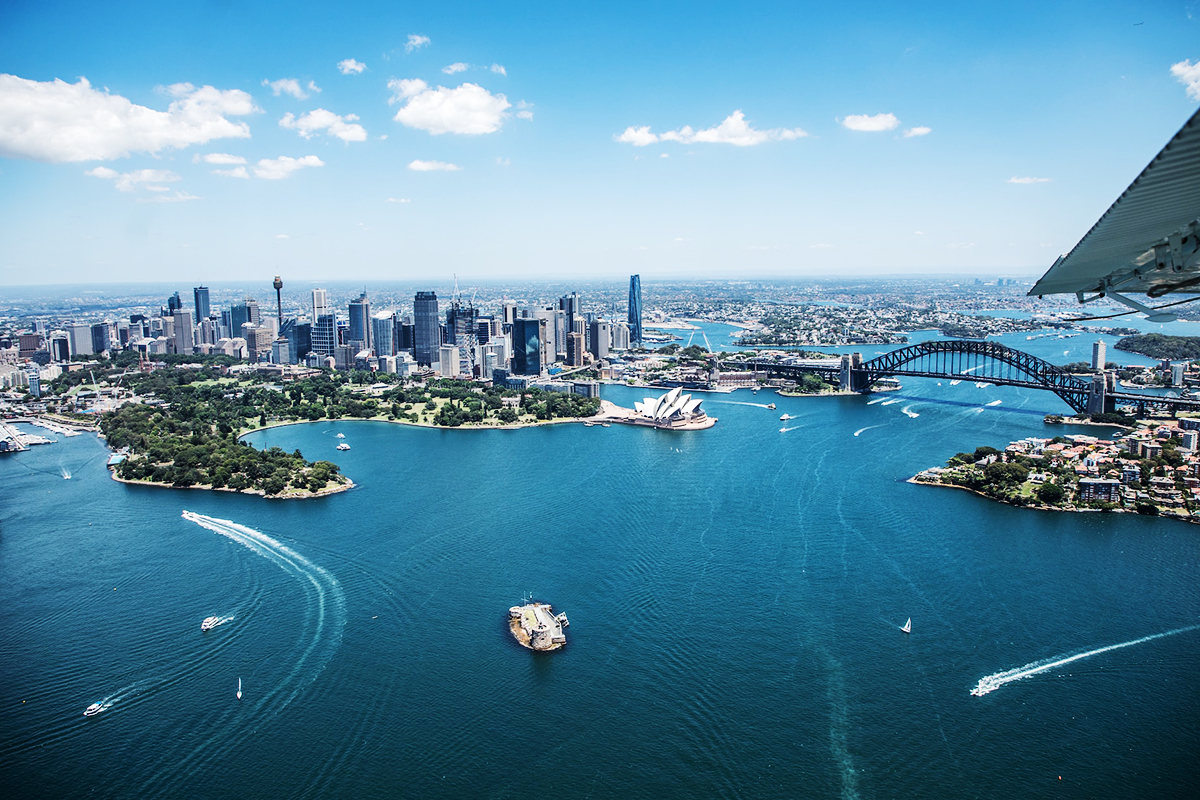
Sydney’s harbor is only the beginning; ocean beaches wrap around the city beyond its headlands.
Best for: Travelers who want a major cultural city, a working harbor and serious beaches in the same trip.
Sydney is my strongest all-round answer because the water is not confined to a postcard view. It is infrastructure, recreation and orientation. Ferries cross one of the world’s great natural harbors; sandstone coves appear below residential streets; the coastline opens into beaches where surfing is part of ordinary life rather than a performance arranged for visitors.
The famous first frame is the Opera House and Harbour Bridge, but it does not explain the whole city. Bondi faces the open ocean. The Bondi-to-Coogee route links cliffs, beaches, rock pools and headlands. Manly has a quieter harbor side and an ocean beach on the other side of a narrow strip of land. The ferry ride from Circular Quay is part of the experience, not merely transport.
Sydney also offers choice without requiring a complete change of trip. A visitor can spend the morning in a gallery or neighborhood market, cross the harbor after lunch and end the day beside the Pacific. The official Sydney beach guide covers Bondi, Manly and the less famous stretches between them.
The coast to prioritize
Choose Bondi and the walk south toward Bronte and Coogee for recognizable ocean scenery. Choose Manly if you want the harbor crossing as well as sand. For a quieter scale, look at smaller harbor beaches and coastal reserves rather than assuming the most famous beach will be the most rewarding one.
When Sydney works best
March to May and September to November generally provide a useful balance of mild weather and manageable visitor numbers. Summer brings the fullest beach atmosphere but also stronger sun, busier sand and higher demand. Ocean conditions can change in every season; swim only between patrol flags where lifeguards are operating.
The honest trade-off
Sydney is expansive. Bondi, Manly, the harbor core and the western neighborhoods are not one compact district. A good visit chooses one side of the city at a time instead of spending each day in transit.
The photograph I would look for
The obvious image is the Opera House beneath the bridge. The more complete one includes the relationship between built city and water: a ferry leaving Circular Quay, swimmers in an ocean pool, or a headland dividing calm harbor from open Pacific.
2. Rio de Janeiro, Brazil: the city where the beach is a public room
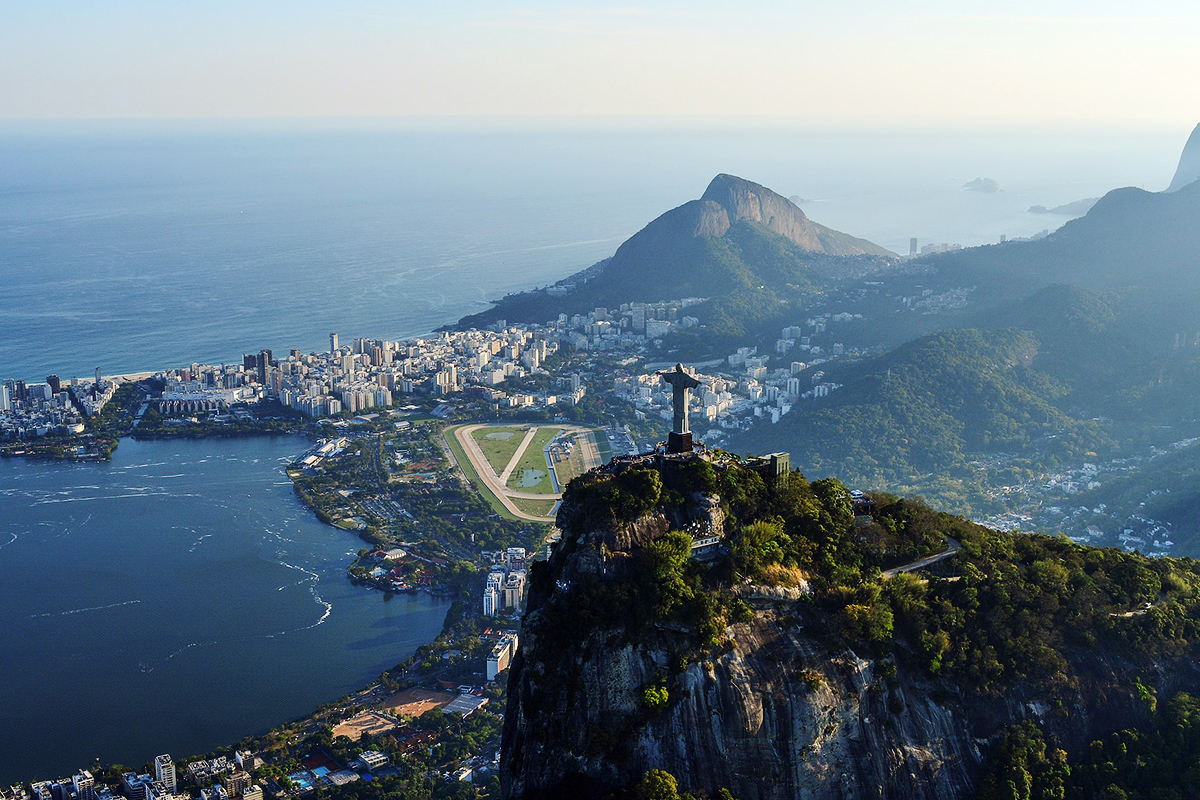
Rio’s density, mountains and Atlantic beaches occupy the same dramatic frame.
Best for: Beach culture, monumental viewpoints and a city whose social life reaches the sand.
In Rio, the ocean is not at the end of the city. It is one of its principal streets. Copacabana’s mosaic promenade, Ipanema’s numbered postos and the curve of mountains beyond the sand give public life a structure: walking, football, swimming, conversation, exercise and sunset all happen in view of the Atlantic.
The city is visually extravagant, but its power comes from compression. Granite peaks rise almost directly behind dense neighborhoods. From Sugarloaf Mountain, the bays and urban fabric interlock; from Corcovado, the coast becomes the organizing line of the landscape. At beach level, those landmarks recede and the human scale returns.
I would not treat Copacabana and Ipanema as interchangeable. Copacabana is broad, theatrical and tied to one of the world’s most recognizable promenades. Ipanema is divided into social micro-geographies and faces a cleaner sunset line toward the Dois Irmãos peaks. Arpoador, between Ipanema and Copacabana, makes the transition visible.
The coast to prioritize
Walk the shore in the early morning when the light is low and the promenade belongs more clearly to daily routines. Return to Arpoador near sunset, but expect company. Use the city’s official visitor resources at Visit Rio to check current events and local information rather than relying on an old itinerary.
When Rio works best
May through October is usually milder and less humid than the southern summer. December through March brings heat, a more intense beach season and a greater chance of heavy showers. Carnival is its own category: culturally important, logistically demanding and not representative of an ordinary week in the city.
The honest trade-off
Rio rewards informed neighborhood planning. Distances, weather and local conditions matter, and a beach camera should never become an invitation to stop paying attention. Carry less, keep equipment discreet and follow current local guidance.
The photograph I would look for
Rio does not need another isolated telephoto of Christ the Redeemer. The stronger image often connects layers: a beach game beneath high-rise apartments, a runner on the black-and-white promenade, or the city folding around water from a high viewpoint.
3. Cape Town, South Africa: the most dramatic meeting of city and landscape
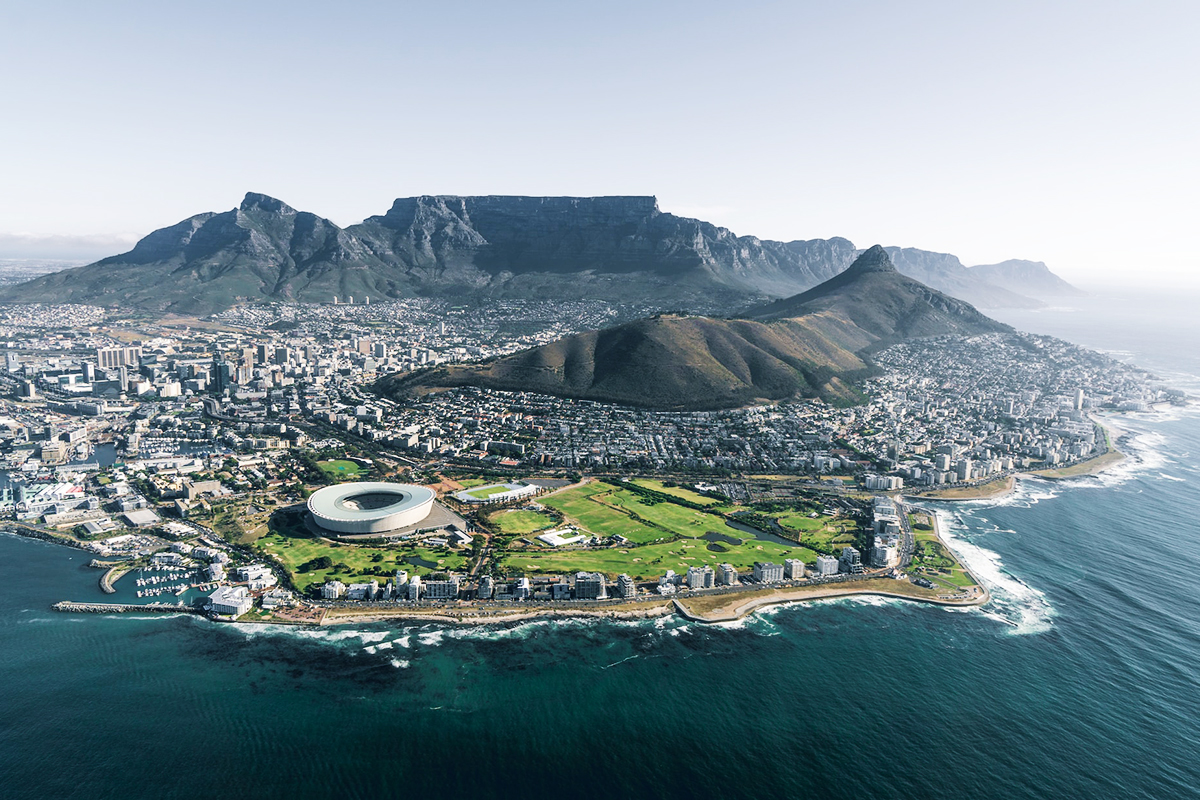
Table Mountain gives Cape Town a scale that few coastal cities can match.
Best for: Mountain-and-ocean scenery, distinct coastal neighborhoods and a trip built around changing weather.
Cape Town does not have one waterfront identity. It has several. The Atlantic Seaboard runs beneath Lion’s Head and the Twelve Apostles; Camps Bay places pale sand against a mountain wall; Sea Point is urban and walkable; the V&A Waterfront is a working-and-leisure harbor; False Bay curves around the other side of the peninsula toward Muizenberg and Simon’s Town.
That variety is the reason to choose Cape Town. A morning can begin above the city on Table Mountain and end on the coast, but the photograph is never only “mountain plus beach.” Wind moves cloud across the plateau. Cold Atlantic water meets sunlit sand. Kelp, granite and fynbos keep the landscape from feeling like a generic resort.
One geographical myth is worth removing: the Atlantic and Indian oceans do not officially meet at Cape Point. The recognized dividing point is farther southeast at Cape Agulhas, according to South African National Parks. Cape Town nevertheless sits at the edge of a peninsula shaped by different exposures, currents and weather systems.
The official Cape Town Atlantic Seaboard guide describes the line from the V&A Waterfront toward Hout Bay, while the city’s Table Mountain information is the right place to check wind-related cableway operation and hiking guidance.
The coast to prioritize
Use Camps Bay for the classic mountain wall, Clifton for compact coves and Bloubergstrand for the distant “table” profile across the water. Muizenberg gives a different coast, with a long beach and False Bay setting rather than the Atlantic Seaboard’s boulders and cold coves.
When Cape Town works best
November through March usually brings warmer, drier conditions, but strong southeasterly wind can reorganize a day. Winter is wetter and cooler, yet broken weather can produce more expressive light. The Atlantic beaches remain cold even when the air is hot.
The honest trade-off
The city’s visual highlights are spread across a large area. A cableway closure, wind or traffic can undo a rigid plan. Hiking also requires real preparation: the official guidance recommends suitable routes, adequate water and clothing, and avoiding solo hiking.
The photograph I would look for
Instead of making Table Mountain fill every frame, use it as a recurring reference: behind beach life, across Table Bay, under its “tablecloth” of cloud or briefly hidden behind the city.
4. Honolulu, Hawaiʻi: the most ocean-centered city holiday
Best for: Warm Pacific water, accessible surfing and a city where the beach can structure every day.
Honolulu is often described as though it were only Waikīkī. That mistake reduces a real capital city to a hotel district. Yet Waikīkī remains essential because it demonstrates how closely urban life and ocean recreation can coexist: the sand sits against a dense line of hotels and streets, the water is used from morning onward, and Lēʻahi—widely known as Diamond Head—holds the eastern edge of the view.
The city extends along Oʻahu’s southeastern shore from Pearl Harbor toward Makapuʻu, taking in neighborhoods, civic institutions, working infrastructure and multiple coastal environments. Waikīkī is the easiest introduction, not the full definition.
The ocean connection is also cultural, not merely recreational. Surfing, outrigger canoe traditions and Native Hawaiian history should not be flattened into resort decoration. A more attentive visit makes room for the Bishop Museum, ʻIolani Palace and the histories behind familiar Hawaiian place names as well as the water.
The official Hawaiʻi tourism guide to Honolulu places Waikīkī within that wider city, while its Waikīkī Beach guide covers the famous shoreline and Lēʻahi view.
The coast to prioritize
Waikīkī is practical for a first surfing lesson and a sunrise walk. Kūhiō Beach has protected sections that can feel calmer, while Ala Moana Beach Park changes the scale beyond the hotel corridor. For more exposed surf and a different landscape, the North Shore is a separate excursion, not another Honolulu neighborhood.
When Honolulu works best
Honolulu is viable year-round. Hawaiʻi’s broad dry season runs from roughly May through October and the wetter season from October through April, though local rainfall varies sharply over short distances. Winter brings larger swell to Oʻahu’s north-facing shores; Waikīkī on the south shore behaves differently.
The honest trade-off
Waikīkī can feel crowded, highly commercial and expensive. The answer is not to pretend it is undiscovered, but to choose accommodation and daily rhythm carefully, spend time beyond the resort strip and respect local rules, culture and environmental limits.
The photograph I would look for
The useful frame contains a relationship: swimmers or canoe paddlers in the foreground, the built edge of Waikīkī and Lēʻahi beyond. A vacant strip of sand could be almost anywhere.
5. Barcelona, Spain: the best combination of art and an urban beach
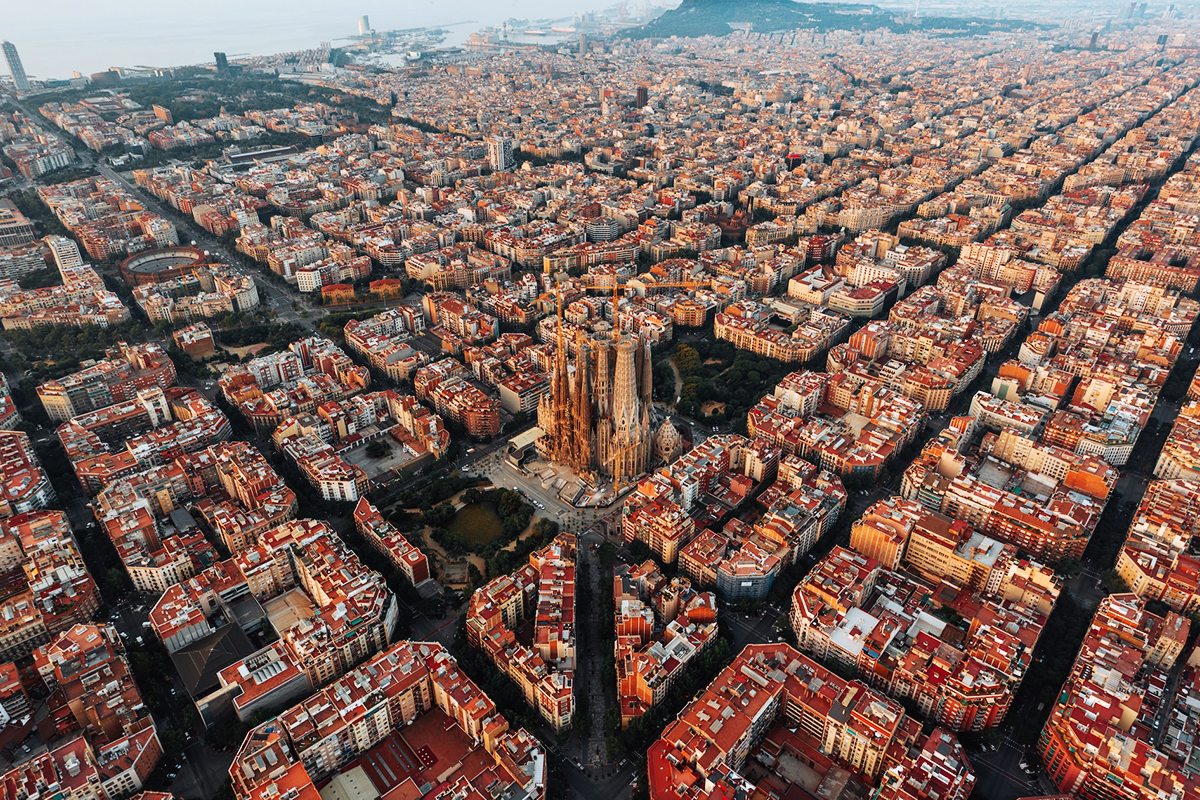
Barcelona’s grid reaches toward a Mediterranean waterfront remade as public urban space.
Best for: Architecture, food, walkable neighborhoods and a beach that can be part of the same day.
Barcelona faces the Mediterranean rather than the open Atlantic, but excluding it on that technicality would misunderstand what most travelers mean when they search for cities by the ocean. The salt water is real, the coastline is public and the beach is woven into the metropolitan experience.
It is not, however, a pure beach destination. Barcelona works because the shore competes with extraordinary urban material: the geometry of Eixample, Gaudí’s buildings, Gothic lanes, neighborhood markets and a dense culture of eating and walking. The sea gives the city another register rather than a single purpose.
Much of the modern waterfront reflects the transformation surrounding the 1992 Olympic Games. Barceloneta is the best-known beach, but it is also the busiest. Somorrostro, Bogatell, Nova Icària and beaches farther northeast change the balance between tourism, neighborhood use and open space. The official Barcelona sea-and-beaches guide explains the character and history of the different sections.
The coast to prioritize
Walk from the old harbor through Barceloneta and continue beyond the first crowded sand. The farther sections are not secret, but they can feel less compressed. Early morning reveals exercise, swimming and practical city life before the beach becomes a midday destination.
When Barcelona works best
May and June or September and early October give the most useful compromise between warm weather and peak-summer density. July and August bring the fullest swimming season but also heat, strong sun, high demand and packed central beaches.
The honest trade-off
Barcelona’s beach is convenient rather than pristine. If uninterrupted coastal nature is the priority, use the city as a base and travel farther along the Catalan coast. If the goal is art, food and architecture with the option of a swim, the urban beach is a strength.
The photograph I would look for
The aerial grid is dramatic, but at ground level the better coastal story may be modest: the Wounded Star sculpture at Barceloneta, swimmers against winter light, or the city’s architecture ending at a wide horizontal sea.
6. Miami and Miami Beach, USA: warm Atlantic water and Art Deco streets
Best for: Long sandy beaches, warm-water swimming, design history and a high-energy city break.
The name requires a small correction. Miami and Miami Beach are separate municipalities. Downtown Miami sits on Biscayne Bay; Miami Beach occupies a narrow barrier island directly on the Atlantic. The international image—pastel lifeguard towers, Ocean Drive, palms and uninterrupted sand—belongs primarily to Miami Beach.
That distinction makes the destination more interesting. A trip can move between the urban core, bayfront neighborhoods, historic communities, islands and the ocean shore. South Beach is only one part of the barrier island: Mid-Beach and North Beach change the pace, while Key Biscayne and Virginia Key offer other relationships between bay, vegetation and open water.
Miami Beach succeeds as an ocean city because the shoreline is continuous and easy to understand. The Beachwalk now runs along the oceanfront for the length of Miami Beach, connecting sections that once felt more separate. The official destination site describes Miami Beach as a nine-mile barrier island and provides a useful overview of beaches across Greater Miami.
The coast to prioritize
Use South Beach for architecture and the most recognizable atmosphere; walk north for a less theatrical experience. South Pointe Park gives a clear meeting of beach, shipping channel and skyline. Do not ignore Biscayne Bay: it explains why this is more than a strip of hotels facing east.
When Miami works best
December through April is generally the easiest period for lower humidity and milder temperatures. Summer is hot, humid and storm-prone. The Atlantic hurricane season officially runs from June 1 through November 30, with activity climatologically highest from mid-August into October. That does not make every day unsafe, but it makes flexible bookings and current forecasts important.
The honest trade-off
The famous districts can be expensive and intensely commercial. Water conditions also change: use guarded areas, understand the beach-flag system and follow current advisories. “Warm ocean” does not mean “risk-free ocean.”
The photograph I would look for
Art Deco color is the obvious subject, but the more complete frame connects it to place: early light on a lifeguard tower, dune vegetation in front of the built edge or the Beachwalk moving parallel to the Atlantic.
7. San Francisco, USA: a cold, rugged Pacific city
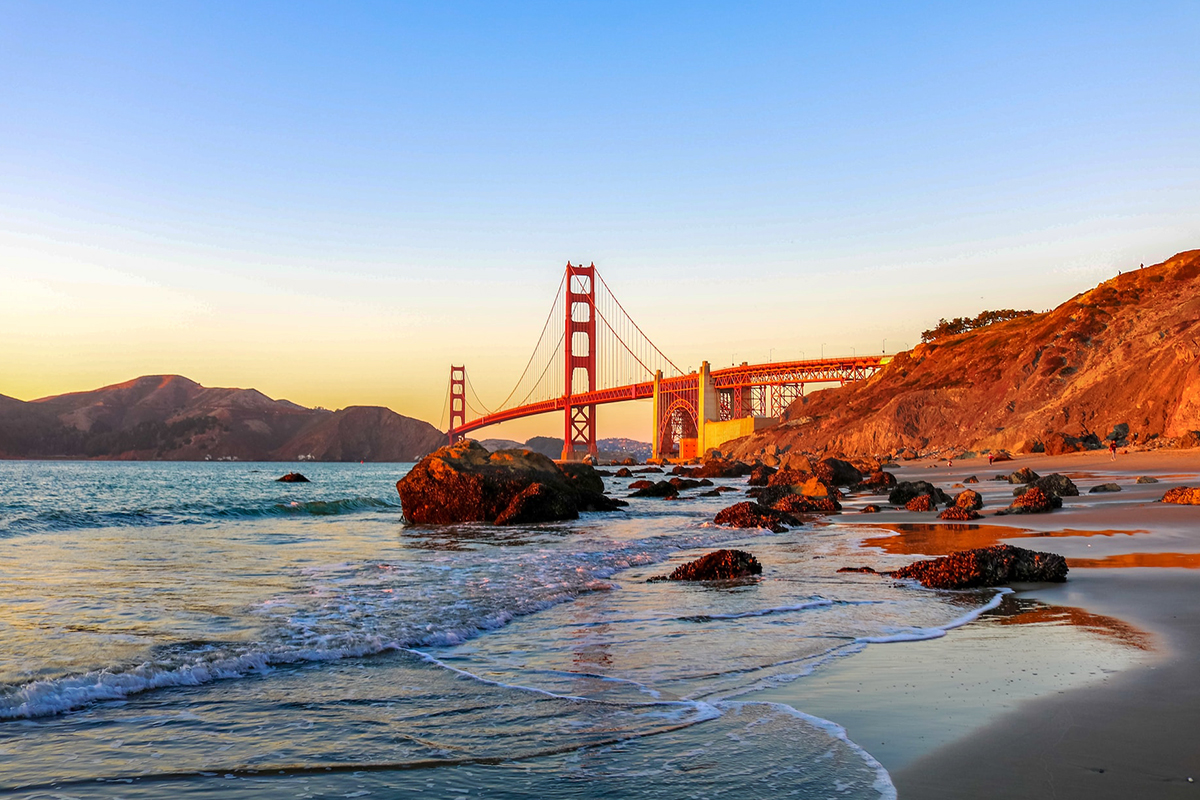
San Francisco’s ocean is beautiful, cold and never merely decorative.
Best for: Coastal walks, fog, headlands and a city where weather gives the landscape its character.
San Francisco occupies the tip of a peninsula: the Pacific lies to the west, the bay to the east and the Golden Gate connects them in the north. Few cities have a clearer geographic diagram. The water arrives as shipping route, shoreline habitat, climate system and public landscape.
This is not the place to choose for a conventional swimming holiday. Ocean Beach stretches for 3.5 miles along the western edge of the city, but the water is cold and the currents are hazardous. Baker Beach and Marshall’s Beach bring the Golden Gate Bridge into the coastal frame; Crissy Field faces the bay and gives the city a calmer, more inhabited waterfront.
The fog is part of the appeal. It can hide the bridge, flatten the horizon or break apart around a tower. A clear sunset may be beautiful, but the city’s more distinctive pictures often come from the boundary between visibility and concealment.
The official San Francisco visitor guide separates the city’s beaches by character. For safety, the National Park Service is more important: its Ocean Beach page explicitly warns that frigid water and powerful currents make the shore unsuitable for ordinary swimming.
The coast to prioritize
Combine Lands End and Sutro Baths with Ocean Beach for the wild western edge. Use Crissy Field and the Presidio for bridge views and a more accessible waterfront walk. Take a ferry onto the bay to understand the city’s shape from the water rather than seeing it only from shore.
When San Francisco works best
September and October often bring the mildest, clearest conditions. Summer can be surprisingly cold and foggy near the coast, even when inland California is hot. Layers are not a cliché here; they are basic equipment.
The honest trade-off
The ocean is for looking, walking and experienced surfing more than casual swimming. Sneaker waves and rip currents are real hazards. Stay well back from wet edges and follow posted warnings.
The photograph I would look for
Let weather do some of the work. A partial bridge emerging from fog, a small figure against Ocean Beach or evening light across the Marin Headlands says more about San Francisco than an aggressively saturated orange bridge under a blank sky.
8. Nice, France: the Mediterranean as the city’s front room
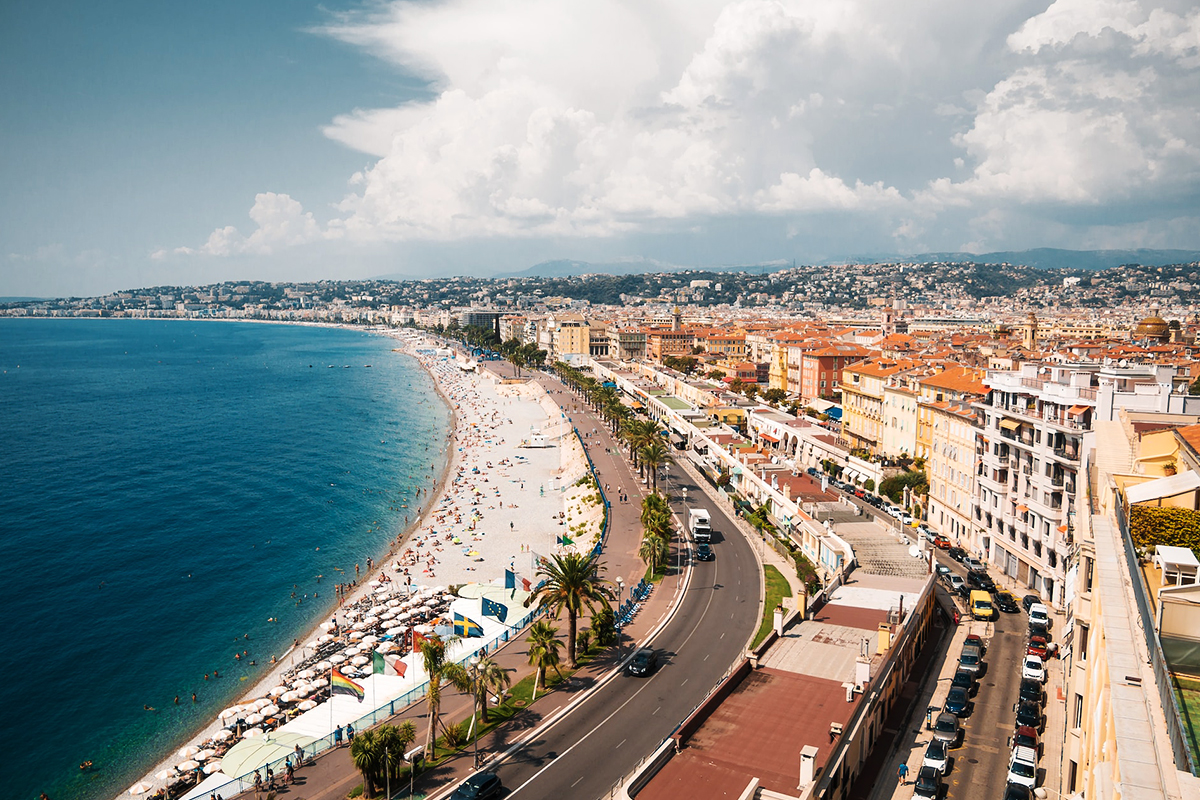
The Promenade des Anglais follows the seven-kilometer curve of the Baie des Anges.
Best for: A walkable European city break where the shoreline is impossible to ignore.
Nice faces the Mediterranean with unusual clarity. The Promenade des Anglais runs for nearly seven kilometers around the Baie des Anges, creating a continuous public edge between architecture and water. The old town, Cours Saleya, Belle Époque facades and hillside viewpoints sit close enough that the coast remains present through an entire day.
The beach is made of smooth pebbles rather than sand. That changes the sound of the shore, the color of the water and the practical experience of lying or walking on it. It is not a defect to disguise. The pale stones help produce the hard blue-and-white contrast that makes Nice immediately recognizable.
Climb—or take the lift—to Colline du Château for the broad curve of city and sea. At street level, move east toward Rauba Capeu to separate the view from the densest promenade traffic. The official Côte d’Azur tourism site describes the Promenade des Anglais and its near-seven-kilometer coastline.
The coast to prioritize
The central beach is convenient, but the wider Côte d’Azur offers small coves and different shorelines around Villefranche-sur-Mer, Beaulieu-sur-Mer and Saint-Jean-Cap-Ferrat. Nice works as a base because train and bus connections make these changes of scale possible without rebuilding the trip around a car.
When Nice works best
May, June and September provide warm light and a more manageable balance than the height of July and August. Winter can be bright and quiet, though it is a promenade season rather than a conventional beach holiday.
The honest trade-off
Central Nice is popular, polished and expensive in peak season. Pebbles are uncomfortable without a mat or suitable shoes, and the shore drops more quickly than a shallow sandy beach. Use supervised areas and current local guidance for swimming.
The photograph I would look for
The elevated sweep from Colline du Château is the establishing shot. After that, work closer: blue chairs, pale stones, the shadow of a palm or the boundary between the promenade’s motion and the still horizon.
9. Lisbon, Portugal: an Atlantic city whose best beaches sit beyond the center
Best for: History, food, light and Atlantic beach excursions rather than a resort-style urban shore.
Lisbon requires honesty about distance. The historic center faces the Tagus, a broad tidal estuary that opens into the Atlantic. The ocean shapes the light, wind and maritime history of the city, but the best sandy beaches are west toward Cascais and south along Costa da Caparica—not beneath the streets of Alfama.
That arrangement is a strength for the right traveler. Lisbon remains a dense city of hills, tiled facades, trams, viewpoints and late meals. The waterfront from Belém toward the center tells the story of departure, trade and river traffic. When the city feels too hot or compressed, trains and ferries extend the trip toward actual Atlantic sand.
Carcavelos is among the most practical large beaches on the Cascais rail line. Guincho is wilder and windier. Across the river, Costa da Caparica provides a long Atlantic coast with surfing and broad sand. Official tourism material describes Lisbon as sitting where the Tagus meets the ocean, while Visit Lisboa’s sun-and-sea guide distinguishes Cascais, Caparica, Sintra and Arrábida.
The coast to prioritize
Stay in Lisbon for the city; give a separate half or full day to the beach. Choose Carcavelos for simple rail access, Cascais for a town-and-coast combination, Guincho for a more exposed Atlantic setting and Caparica for long sand and surf culture.
When Lisbon works best
May, June, September and early October usually balance warm days with fewer peak-summer extremes. Atlantic water remains cooler than many first-time visitors expect, even when the sand is hot.
The honest trade-off
Lisbon is coastal but not a walk-from-the-cathedral-into-the-ocean city. Anyone promising a central urban beach is collapsing the region into the municipality. Build the transport time into the day and check the final return schedule before staying for sunset.
The photograph I would look for
In the city, use the Tagus as negative space around ferries, bridges and riverfront architecture. At the ocean, make the Atlantic’s scale clear—wind, surf and an open horizon rather than a generic close-up of sand.
10. New York City, USA: an Atlantic city hiding behind its skyline

New York’s skyline rises from a harbor connected directly to the Atlantic.
Best for: The world’s fullest city break with a genuine harbor history and public ocean beaches at its outer edge.
New York is so strongly associated with towers, avenues and density that its coastal geography can disappear from the imagination. Yet the city occupies islands and peninsulas at the mouth of the Hudson River. Tides move through its harbor. Ferries remain public transport. The Atlantic reaches the long ocean edge of Brooklyn and Queens.
The waterfront experience begins in the harbor: Battery Park, the Staten Island Ferry, Brooklyn Bridge Park, Governors Island and the piers along the Hudson and East River. These are not all ocean beaches, but together they reveal a city organized by shipping, migration and tidal water.
For sand, travel outward. Coney Island combines Atlantic beach, boardwalk and amusement history. The Rockaways face the open ocean and have a distinct surf culture. NYC Parks maintains 14 miles of public beaches, which are free; swimming is seasonal and permitted only when lifeguards are on duty. Check the official NYC beach page for current dates, water conditions and access.
The coast to prioritize
Use the Staten Island Ferry or an NYC Ferry route for the relationship between skyline and harbor. Choose Coney Island for cultural history and a densely layered scene; choose the Rockaways when the ocean itself is the priority. Neither should be treated as a quick extension of a Midtown afternoon.
When New York works best
May, June, September and October are generally strongest for long walks and a harbor-focused visit. The official swimming season runs from Memorial Day weekend into early September, with exact dates and advisories published by the city.
The honest trade-off
New York is a coastal metropolis, not an effortless beach resort. The shore may require a long subway, ferry or bus ride. Summer humidity and beach crowds can be intense; outside the guarded season, the ocean remains a landscape rather than a place for swimming.
The photograph I would look for
Do not make the water a strip beneath the skyline. Give it enough space to show scale: a ferry crossing the frame, the Statue of Liberty between harbor traffic or the Verrazzano-Narrows Bridge opening toward the Atlantic. For closer work, my guides to Brooklyn Bridge photo spots and Central Park photo spots can extend the New York story beyond this list.
Three famous waterfront places that need a more accurate label
The previous version of this list included Santorini, Tokyo and Buenos Aires as though all three offered the same kind of ocean-city trip. They are worth keeping in the conversation, but not without qualification.
Oia on Santorini: a coastal village on an island, not a city
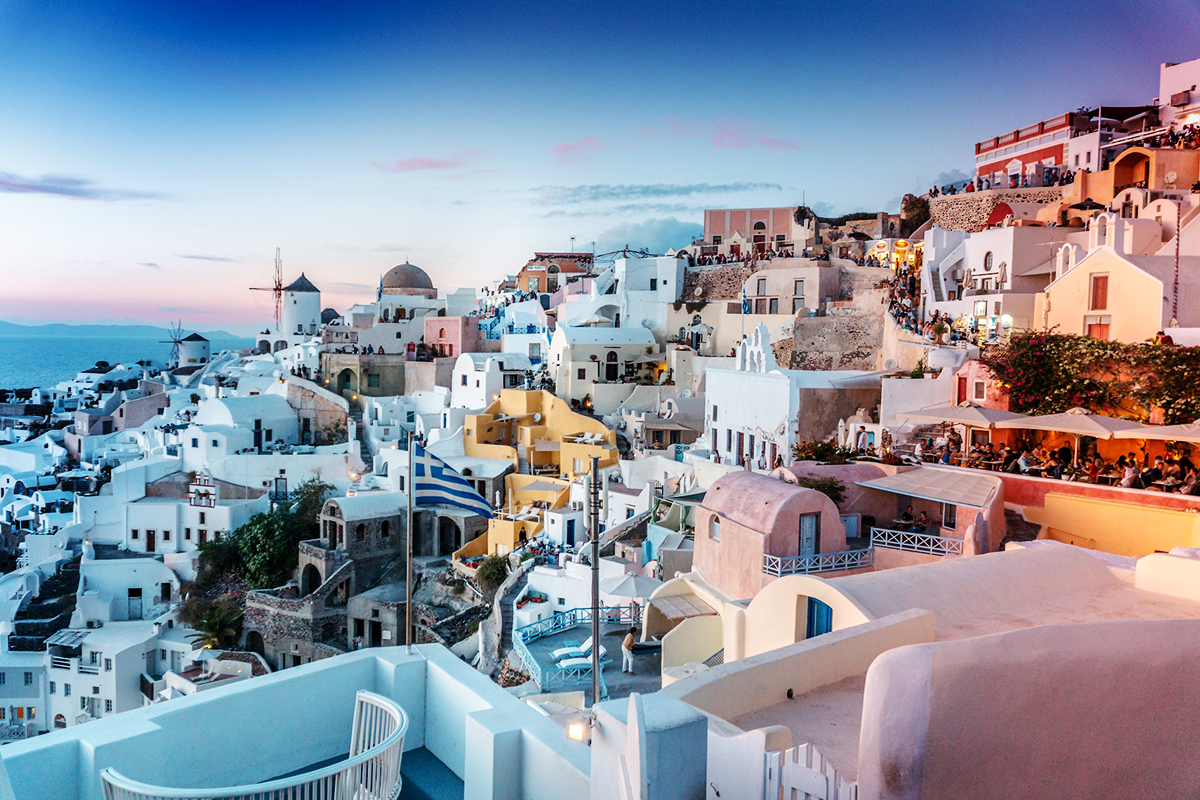
Oia is a village on Santorini, a volcanic island in the Aegean Sea.
Santorini is an island; Oia and Fira are settlements on it. The caldera, whitewashed architecture and Aegean light make it an exceptional coastal destination, but it does not answer the same question as Sydney or Barcelona. Choose it for an island stay, cliff-edge views and small-settlement scale—not for the cultural and practical range of a large city.
Tokyo: an enormous bay city whose ocean is not always visible
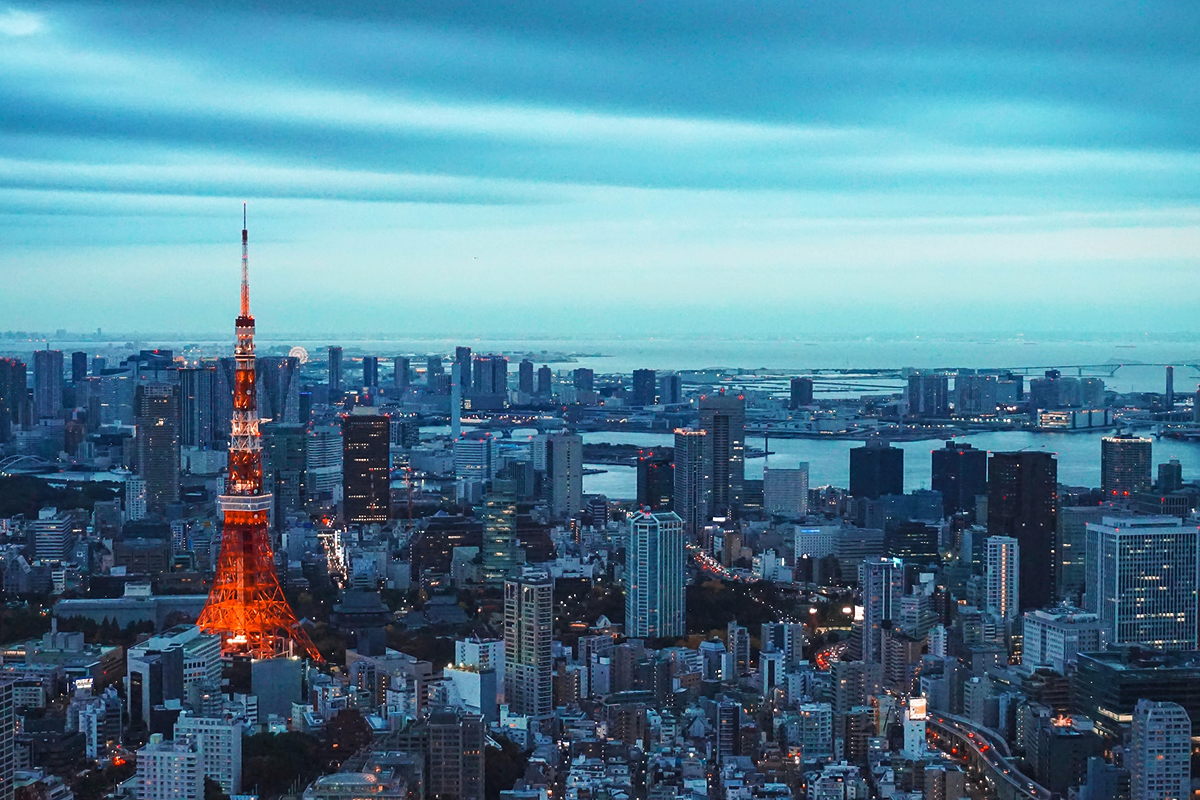
Tokyo is coastal, but much of the visitor experience unfolds away from the open Pacific.
Tokyo sits on Tokyo Bay and has vast reclaimed waterfront districts, ports, rivers and islands. Odaiba, Toyosu and the bay cruises reveal that geography. Yet a first visit built around Shibuya, Shinjuku, Asakusa and central neighborhoods can pass with little sense of an ocean shore. Tokyo belongs on a list of major coastal metropolises, but it is not the strongest answer for someone specifically seeking a city-and-beach holiday.
Buenos Aires: an estuary city, not an Atlantic beach city
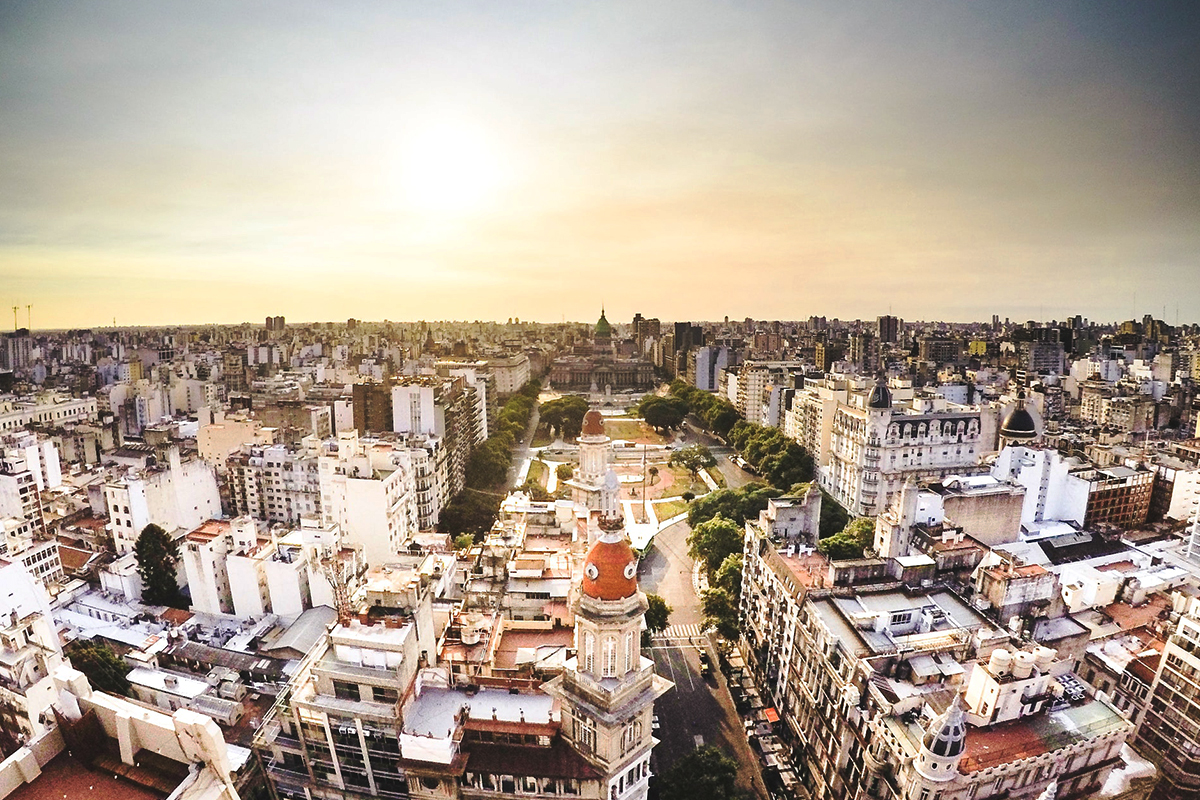
Buenos Aires stands beside the immense Río de la Plata estuary.
The Río de la Plata is so wide that it can resemble a sea, but Buenos Aires does not face the open Atlantic and is not a conventional beach city. Its waterfront, port history and river ecology matter; its strongest travel identity comes from neighborhoods, architecture, food, parks, football and cultural life. Include it among great cities by large tidal water, not among the clearest cities by the ocean.
Which ocean city should you choose?
The best answer changes with the role you want the coast to play.
| If your priority is… | Start with… | Why |
|---|---|---|
| Swimming or learning to surf near the city core | Honolulu, Sydney, Miami Beach | The beach can be part of an ordinary day rather than a separate excursion |
| The strongest public beach culture | Rio de Janeiro | Dense neighborhoods and social life meet the sand directly |
| Mountains and ocean in the same frame | Cape Town or Rio | Both compress major landforms, water and city into close proximity |
| Rugged coast rather than warm water | San Francisco | Fog, headlands, cold Pacific and long coastal paths define the place |
| Art and architecture with a beach option | Barcelona | The city remains the main event, with Mediterranean sand close by |
| A walkable promenade and clear blue water | Nice | The Baie des Anges forms one continuous edge of the center |
| History and Atlantic day trips | Lisbon | The Tagus gives the city maritime character; trains and ferries reach ocean beaches |
| A warm winter escape | Honolulu or Miami Beach | Both offer warm-weather coastal life when much of Europe and North America is cold |
| The biggest cultural city with optional ocean time | New York | Museums and neighborhoods dominate, but harbor and public Atlantic beaches are real |
| A first coastal city with the fewest compromises | Sydney | Harbor, beaches, culture and public transport form the most complete combination |
Ocean access is not the same as a good swimming beach
A blue line on a map says nothing about water temperature, currents, seasonal lifeguards or whether the shore is public.
San Francisco faces the Pacific more directly than Barcelona faces the Atlantic, yet Barcelona is the easier place for an ordinary summer swim. Lisbon has an Atlantic identity, but its best ocean beaches require a train, ferry or bus. New York maintains miles of public beach, though swimming is allowed only during a defined guarded season. Cape Town may have hot summer air beside very cold Atlantic water.
Before choosing a city, check five things:
- Travel time from the neighborhood where you will stay. “In the metropolitan area” may mean an hour each way.
- Beach surface. Nice is pebble; central Barcelona is sand; parts of the Pacific coast are rock, cliff or exposed surf.
- Water conditions. Temperature, rip currents, swell and water-quality advisories matter more than appearance.
- Guarded season and local rules. Swim where and when lifeguards operate, and follow flags and closures.
- Weather risk. Atlantic hurricane season affects Miami; wind can close Cape Town’s cableway; fog can erase San Francisco’s famous view.
I would never choose a coastal city solely from a photograph of empty turquoise water. That image may have been made in a different season, at a beach far outside the city or under conditions that lasted an hour.
The best ocean cities for photography
Every city on this list is photographically rich, but they reward different ways of looking.
For grand landscape
Cape Town and Rio offer the strongest compression of mountains, city and water. A moderate telephoto lens is often more useful than an extreme wide angle because it keeps the landforms substantial rather than pushing them toward the horizon.
For architecture against water
Sydney, Barcelona, Miami Beach and Nice provide clear built edges. Look for the transition rather than isolating a landmark: stairs descending to sand, a ferry passing an opera house, Art Deco facades beyond dune vegetation or Belle Époque architecture meeting the promenade.
For weather and atmosphere
San Francisco is the obvious choice. Fog, reflected light and cold coastal wind alter the city quickly. Lisbon can produce similarly strong transitions where Atlantic weather reaches the Tagus.
For human activity
Rio, Honolulu and Sydney make the coast visible through use—surfers, swimmers, walkers, beach games and ferries. Photograph public life respectfully. A public beach is not blanket permission for intrusive portraits; ask when a person is clearly identifiable and central to the frame.
For skyline and harbor
New York works best from the water or the opposite shore. The skyline becomes more legible when a ferry, pier or harbor channel gives it scale.
How to plan a coastal city break without spending the trip in transit
The common mistake is treating every famous waterfront location as if it were adjacent. Coastal cities are often stretched along bays, barrier islands or peninsulas.
Choose one coastal zone per day
In Sydney, do not combine Manly, Bondi and distant western neighborhoods without accepting a transit-heavy day. In Cape Town, group the Atlantic Seaboard rather than crossing the peninsula repeatedly. In New York, give Coney Island or the Rockaways a real block of time.
Stay near the coast only if the coast is the priority
A beach hotel in Miami Beach or Waikīkī makes sense when mornings and evenings by the water matter. In Lisbon or Barcelona, staying in a central neighborhood may produce a better overall trip even if the beach takes longer to reach.
Leave room for weather
Wind, swell, fog and storms are not small details in an ocean city. Build one movable coast day into a longer trip. If visibility closes Table Mountain or San Francisco’s headlands, use museums, neighborhoods and food rather than forcing the plan.
Check the return journey before sunset
A distant beach can feel simple in daylight and awkward after the last convenient train or ferry. Confirm current schedules rather than relying on a screenshot from an old article.
Traveling responsibly in coastal cities
Urban beaches look resilient because buildings and infrastructure surround them. They are not.
Dunes protect parts of Miami Beach and other low coasts; stay outside roped restoration areas. Do not climb unstable cliffs for a cleaner photograph. Avoid touching or standing on coral. Carry rubbish away when bins are full. Use reef-conscious practices where local authorities recommend them, and choose operators that do not harass wildlife.
Water safety deserves the same attention. Swim in guarded areas, understand warning flags and do not assume calm-looking water is harmless. The National Park Service warns specifically about San Francisco’s cold water, sneaker waves and rip currents. Miami publishes current beach-safety guidance. New York provides seasonal water-quality advisories. Local information should override a general travel article every time.
Coastal cities also face housing pressure, water scarcity, erosion and climate risk. A responsible visit does not require a lecture at every meal, but it does require ordinary restraint: use water carefully where drought is an issue, respect residential buildings, spend beyond international chains and do not treat a neighborhood as a stage set.
Frequently asked questions
What are the best cities by the ocean?
The strongest all-round choices are Sydney, Rio de Janeiro, Cape Town, Honolulu, Barcelona, Miami Beach, San Francisco, Nice, Lisbon and New York City. Sydney offers the best balance of major-city culture, harbor life and accessible ocean beaches; the right choice depends on whether you prioritize swimming, scenery, food, architecture or nightlife.
Which city has the best beach inside the city?
Honolulu, Rio de Janeiro, Sydney and Miami Beach have the clearest integration of urban life and usable beach. Waikīkī is easiest for a resort-style stay, Rio has the strongest public beach culture, Sydney offers the greatest variety and Miami Beach has the longest continuous warm-water urban shoreline.
What is the best coastal city in Europe?
Barcelona is the most complete combination of art, food, architecture and accessible sand. Nice is stronger for a continuous waterfront promenade; Lisbon is better for history and Atlantic beach excursions. The three offer different relationships with the coast rather than a single objective winner.
Which American cities are directly on the ocean?
Miami Beach and Honolulu place ocean beaches directly against dense urban districts. San Francisco faces the Pacific but is not a conventional swimming destination. New York has Atlantic beaches in Brooklyn and Queens, although they are far from Midtown. Los Angeles and San Diego are other major options not covered in the main ten.
Is Barcelona on the ocean?
Strictly speaking, Barcelona is on the Mediterranean Sea, not the open Atlantic Ocean. The Mediterranean is a sea connected to the Atlantic. Barcelona still fits the ordinary travel meaning of a coastal or seaside city because its beaches and saltwater waterfront are integral to the urban experience.
Is Lisbon directly on the Atlantic Ocean?
Central Lisbon sits on the Tagus estuary near its opening to the Atlantic. The city has a strong maritime and Atlantic identity, but the best sandy ocean beaches are outside the historic center around the Cascais line and Costa da Caparica.
Is New York City really an ocean city?
Yes. New York Harbor connects directly to the Atlantic, the city is built across islands and peninsulas, and Brooklyn and Queens have public Atlantic beaches. The ocean is simply less visible from the typical Midtown itinerary than the skyline is.
Is Tokyo a city by the ocean?
Tokyo is a coastal metropolis on Tokyo Bay, connected to the Pacific. It belongs geographically among the world’s great coastal cities, but its open-ocean and beach experience is less central to a typical short visit than it is in Sydney, Rio or Honolulu.
Is Buenos Aires on the ocean?
Buenos Aires stands on the Río de la Plata, an enormous tidal estuary that opens into the Atlantic. It is a waterfront and port city, but not a direct Atlantic beach city.
Is Santorini a city?
No. Santorini is a Greek island. Oia and Fira are settlements on the island. They are excellent seaside destinations but should not be described as major cities by the ocean.
Which ocean city is warm throughout the year?
Honolulu offers the most consistently warm ocean-city climate in this list. Miami is also warm for much of the year, though summer brings intense heat, humidity and tropical-storm risk. Rio is warm but has a more noticeable wet summer pattern.
Which coastal city is best without a car?
Barcelona, Nice and New York are especially easy to explore by walking and public transport. Sydney’s ferries and rail system make many waterfront areas accessible, though the city is large. Lisbon works well without a car if beach days are planned around train and ferry routes.
The ocean should change the city
The best cities by the ocean are not simply beautiful cities placed near blue water. The coast should change the movement of the day.
In Sydney, it becomes a ferry route and a chain of beaches. In Rio, it becomes public space. In Cape Town, it changes the weather beneath the mountain. In San Francisco, it brings cold current and fog. In Lisbon and New York, it explains centuries of arrival and departure even when the beach is not visible from the center.
That is the distinction I would keep. Choose Honolulu or Miami Beach when the water itself is the holiday. Choose Barcelona or Nice when the sea should accompany art, food and long urban walks. Choose Cape Town, Rio or San Francisco when the coast should feel larger than the city built beside it.
The most useful list is not the one with the greatest number of famous names. It is the one that tells you what kind of ocean you will actually meet when you arrive.