
From across the Hudson, Lower Manhattan can look almost compressed: glass towers overlap, older stone buildings disappear into the street grid, and the skyline becomes a single uneven line. Then One World Trade Center separates itself. Its faceted sides catch the light, its roof narrows into a long spire, and the question seems settled before anyone has measured a thing.
One World Trade Center is the tallest building in New York City. Its official architectural height is 1,776 feet, or 541.3 metres. The figure is deliberate, referring to the year of the United States Declaration of Independence, and it gives the tower a clear lead over every completed building in the city.
But this is only the short answer.
For this update, I compared the figures in the Council on Tall Buildings and Urban Habitat’s skyscraper database—now maintained by the Council on Vertical Urbanism—with the building’s official records. The distinction that matters is easy to miss: One World Trade Center is tallest when its spire is included. Central Park Tower has a higher roof and a higher occupied floor.
That is not a technicality invented for trivia nights. It changes how the skyline is ranked, how observation decks are compared, and even how a photographer understands the apparent scale of a building.
The answer at a glance
| Question | Current answer | Height | Why it matters |
|---|---|---|---|
| Tallest completed building in NYC by architectural height | One World Trade Center | 1,776 ft / 541.3 m | The permanent spire counts as part of the architecture |
| Tallest roof in NYC | Central Park Tower | 1,550 ft / 472.4 m | Its roof is higher than One WTC’s roof |
| Highest occupied floor in NYC | Central Park Tower | 1,417 ft / 431.8 m | It exceeds One WTC’s highest occupied level |
| Highest indoor public viewpoint in NYC | One World Observatory | about 1,268 ft / 386.5 m | Enclosed views from the top of Lower Manhattan |
| Highest outdoor sky deck in NYC | Edge | 1,131 ft / 345 m | An open-air platform at 30 Hudson Yards |
| Tallest residential building in NYC | Central Park Tower | 1,550 ft / 472.4 m | A residential supertall on Billionaires’ Row |
If I had to reduce the argument to one sentence, it would be this: One World Trade Center is officially the tallest building in New York, while Central Park Tower is physically taller to the roof and places people higher above the street.
Why “tallest” does not have one universal meaning
Skyscrapers are not ranked by looking at the topmost visible object and calling it a day. The accepted system separates several kinds of height, because a permanent spire is not the same thing as a removable antenna, and a roof is not the same thing as an occupied floor.
The CTBUH height criteria use three principal measurements:
- Height to architectural top. This is the standard used for the official ranking. It includes permanent spires but excludes antennas, flagpoles, signs and technical equipment.
- Highest occupied floor. This measures the floor level used by people on a regular basis. Mechanical rooms do not qualify.
- Height to tip. This includes everything permanently attached at the top, even equipment that does not count as architecture.
One World Trade Center’s spire was examined under those rules. The Council determined that it is an integral and permanent architectural feature, so the full 1,776 feet counts toward the tower’s official height. The absolute tip is slightly higher—1,792 feet, or 546.2 metres—but that extra equipment is not included in the architectural ranking.
The difference becomes clearer beside Central Park Tower:
| Measurement | One World Trade Center | Central Park Tower | Leader |
|---|---|---|---|
| Architectural height | 1,776 ft / 541.3 m | 1,550 ft / 472.4 m | One WTC |
| Roof or structural top | roughly 1,368 ft / 417 m at the parapet | 1,550 ft / 472.4 m | Central Park Tower |
| Highest occupied floor | 1,268 ft / 386.5 m | 1,417 ft / 431.8 m | Central Park Tower |
This is why two apparently contradictory statements can both be true. One World Trade Center holds the official title. Central Park Tower contains more usable building above the point where One World Trade Center’s occupied floors end.
I think the most honest guide should state both facts rather than burying the second one in a footnote.
One World Trade Center facts
| Detail | Fact |
|---|---|
| Official name | One World Trade Center |
| Common former name | Freedom Tower |
| Address | 285 Fulton Street, New York, NY 10007 |
| Observatory entrance | 117 West Street |
| Architectural height | 1,776 ft / 541.3 m |
| Height to tip | 1,792 ft / 546.2 m |
| Highest occupied/observatory level | about 1,268 ft / 386.5 m |
| Floor count | 94 above ground in the CTBUH database; commonly marketed as 104 stories |
| Construction began | April 27, 2006 |
| Full height reached | May 10, 2013 |
| Completed and opened | 2014 |
| Architect | David Childs of Skidmore, Owings & Merrill (SOM) |
| Site master planner | Daniel Libeskind / Studio Libeskind |
| Primary use | Offices, with public observatory and dining near the top |
| Sustainability | LEED Gold certification |
| World ranking in 2026 | Seventh-tallest completed building by architectural height |
The tower is often still called the Freedom Tower, especially in older articles and casual conversation. That was the project’s best-known early name. The Port Authority formally adopted One World Trade Center as the building’s name in 2009, and that is the name I use throughout this guide.
How One World Trade Center became New York’s tallest building
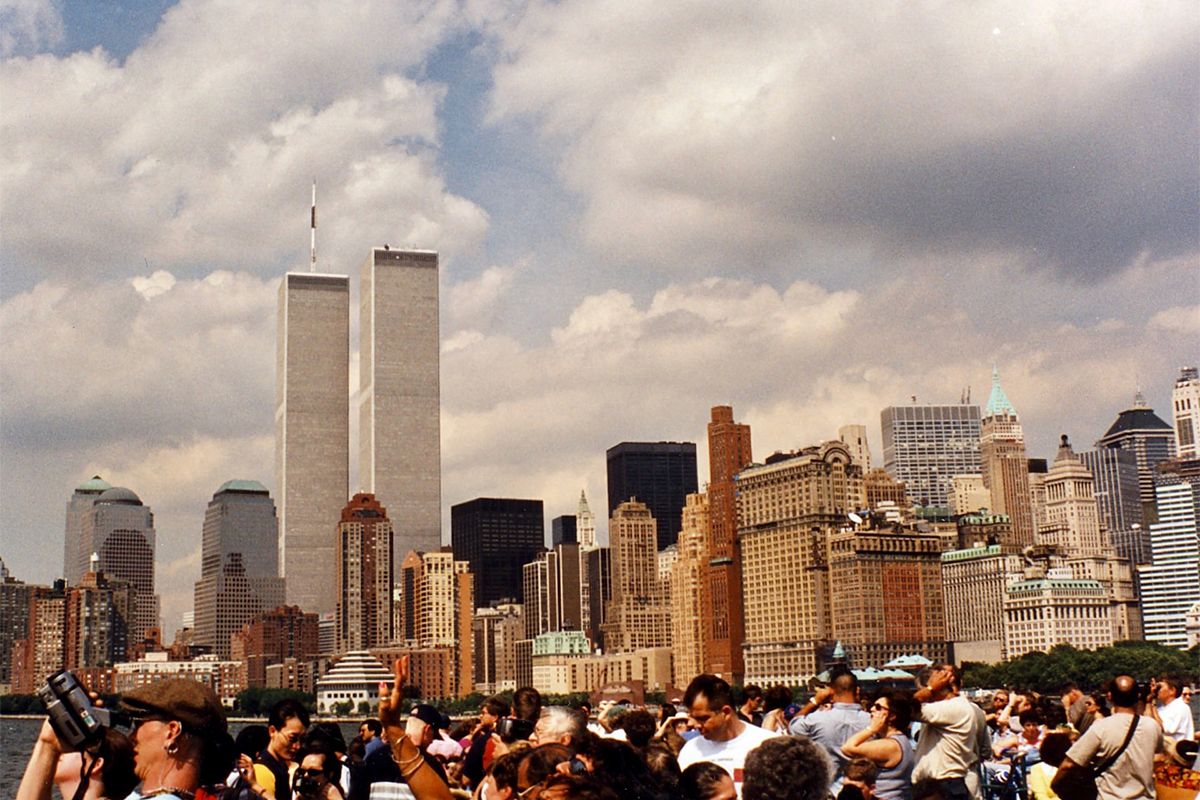
The height record has moved around New York for more than a century. The Woolworth Building, completed in 1913, briefly made Lower Manhattan the vertical centre of the world. The Chrysler Building took the title in 1930, only to lose it to the Empire State Building the following year. The North Tower of the original World Trade Center surpassed the Empire State Building in the early 1970s.
That chronology matters, but the present World Trade Center site cannot be understood as a normal succession of record holders.
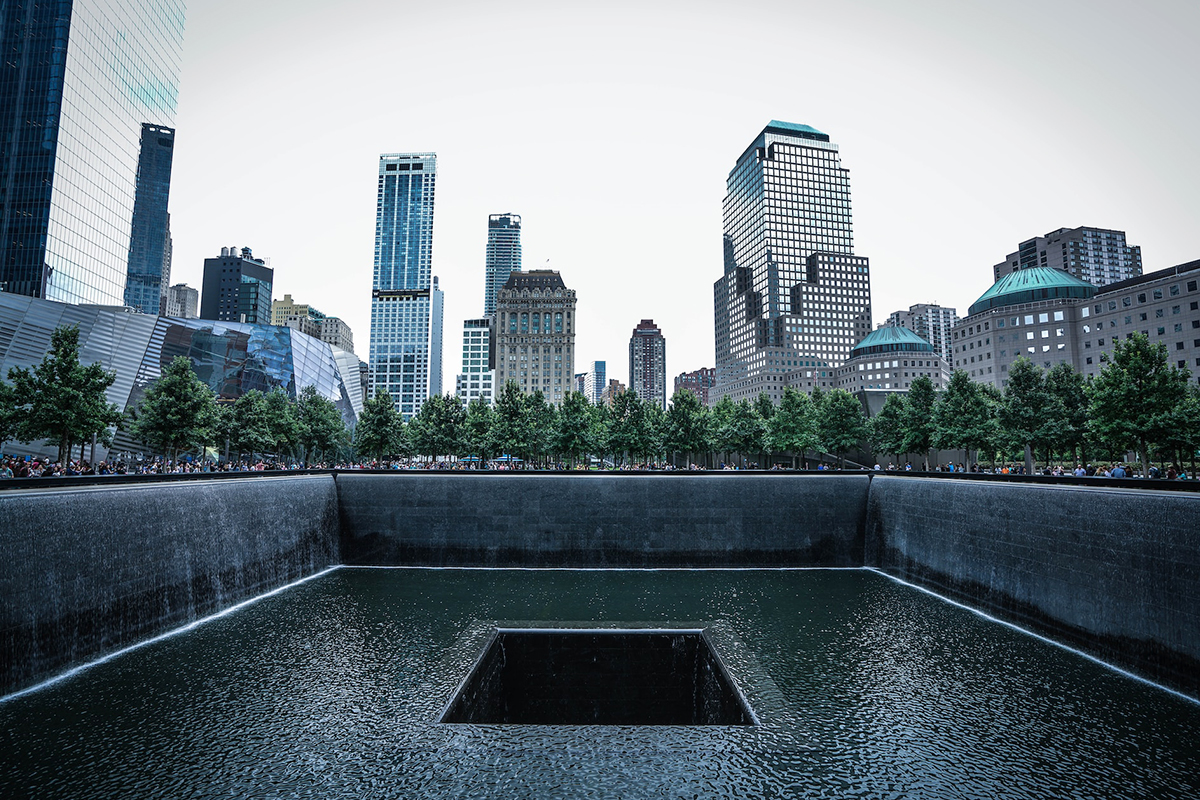
The terrorist attacks of September 11, 2001, killed 2,977 people that day. The National September 11 Memorial also commemorates six people killed in the 1993 World Trade Center bombing, bringing the number of names inscribed at the memorial to 2,983. The two memorial pools occupy the precise footprints of the former North and South Towers. One World Trade Center stands immediately northwest of them; it does not sit in either tower’s footprint.
I am careful about that geography because the old version of this article blurred the tower, the memorial and the original Twin Towers into a single symbol. They are connected, but they are not interchangeable. The memorial is a place of names, absence and private grief in public space. The office tower belongs to the rebuilt city around it.
From master plan to final tower
After an international planning competition, Daniel Libeskind’s proposal established the broad symbolic and spatial framework for rebuilding the site. The tower that was ultimately constructed was designed by David Childs of Skidmore, Owings & Merrill, working through years of revisions involving security, engineering, ownership and public agencies.
Construction began on April 27, 2006. The final design was publicly presented that June. Workers installed the final sections of the spire in May 2013, bringing the building to 1,776 feet, and One World Trade Center opened in 2014.
That division of credit is worth keeping precise: Libeskind was the World Trade Center master planner; Childs and SOM designed One World Trade Center itself.
The meaning of 1,776 feet
The symbolic number survived major changes to the design. At 1,776 feet, the tower refers to 1776, the year the Declaration of Independence was adopted.
Symbols can become heavy when they are repeated too often, and earlier writing about One World Trade Center frequently relied on words such as resilience, rebirth and defiance until the building almost disappeared behind them. I find the architecture more convincing when it is described plainly. A large commercial tower was built beside a memorial on a site where rebuilding was politically, technically and emotionally difficult. Its height carries a national reference, but its daily life is also ordinary: people arrive for work, commuters cross the Oculus, visitors queue for the observatory, and Lower Manhattan continues around it.
The architecture: a simple form that keeps changing
One World Trade Center does not have a single fixed silhouette. From one direction it appears broad and almost monolithic. Walk around the site and the surface seems to twist, although the building itself does not.
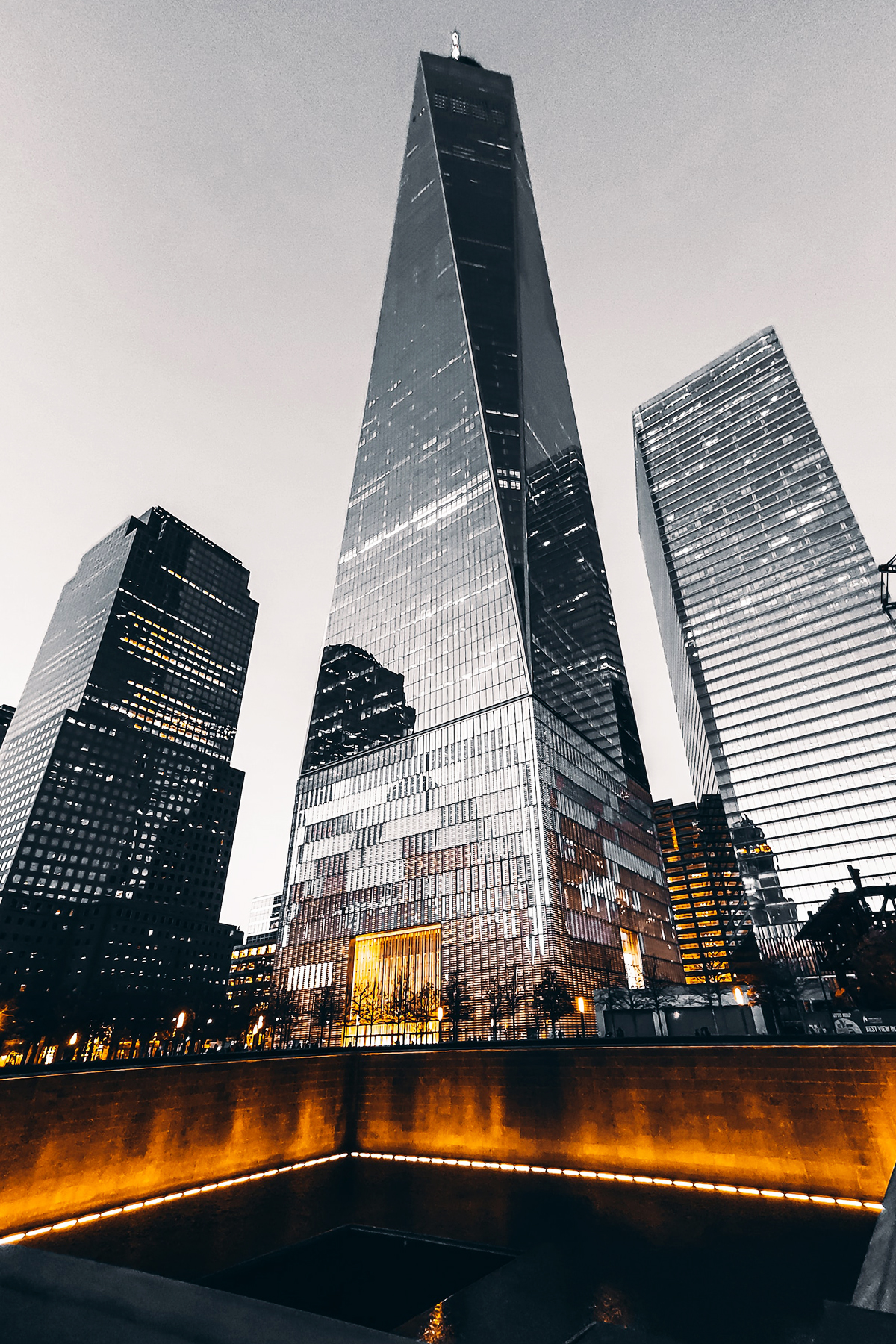
The tower begins from a square base. As it rises, the corners are chamfered back, producing eight elongated isosceles triangles. Near the middle, the plan becomes an octagon; at the top it resolves into a smaller square rotated 45 degrees from the base. SOM describes the resulting form as faceted, and that geometry is the reason the building changes so decisively with the light.
Why the glass can look blue, silver or nearly black
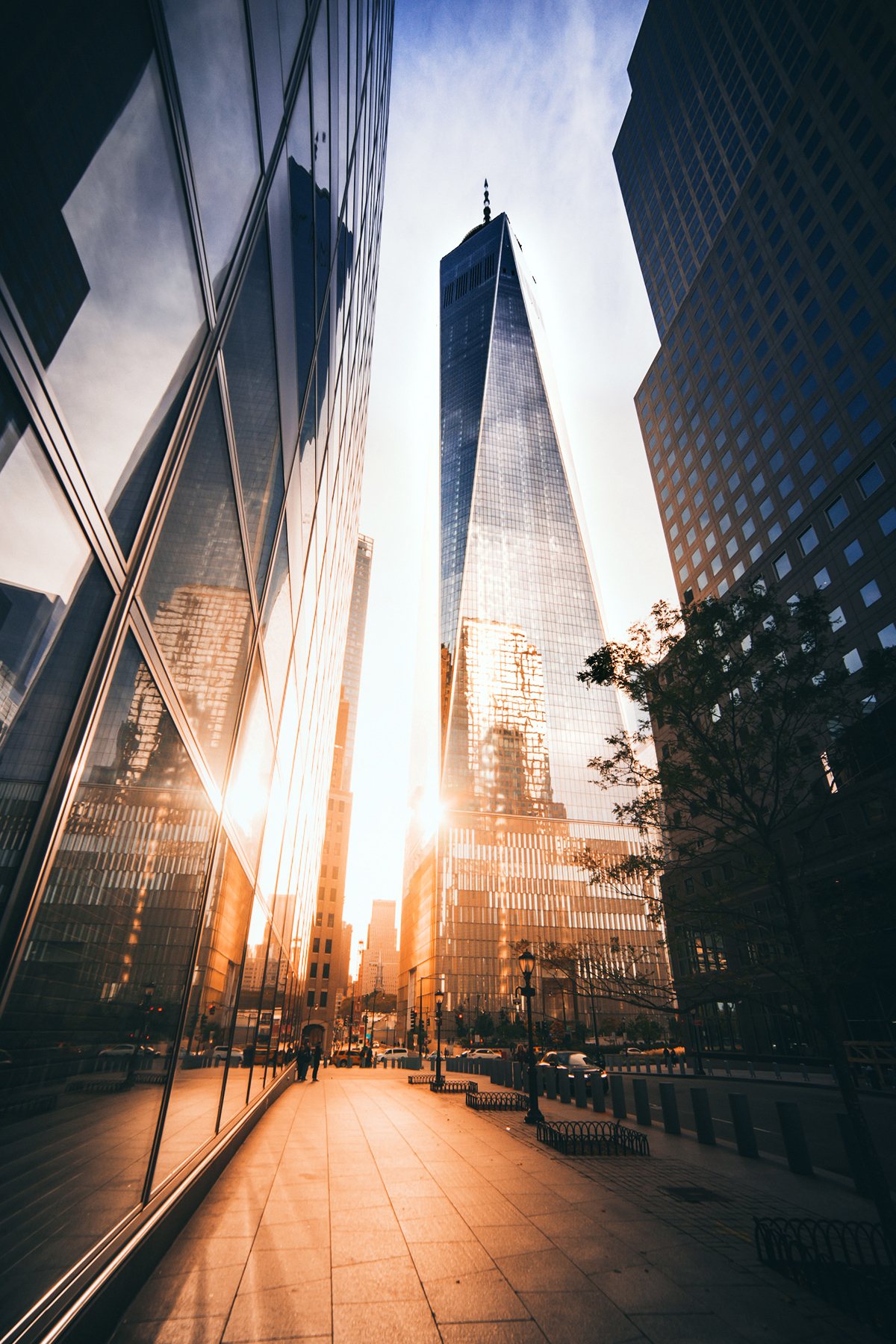
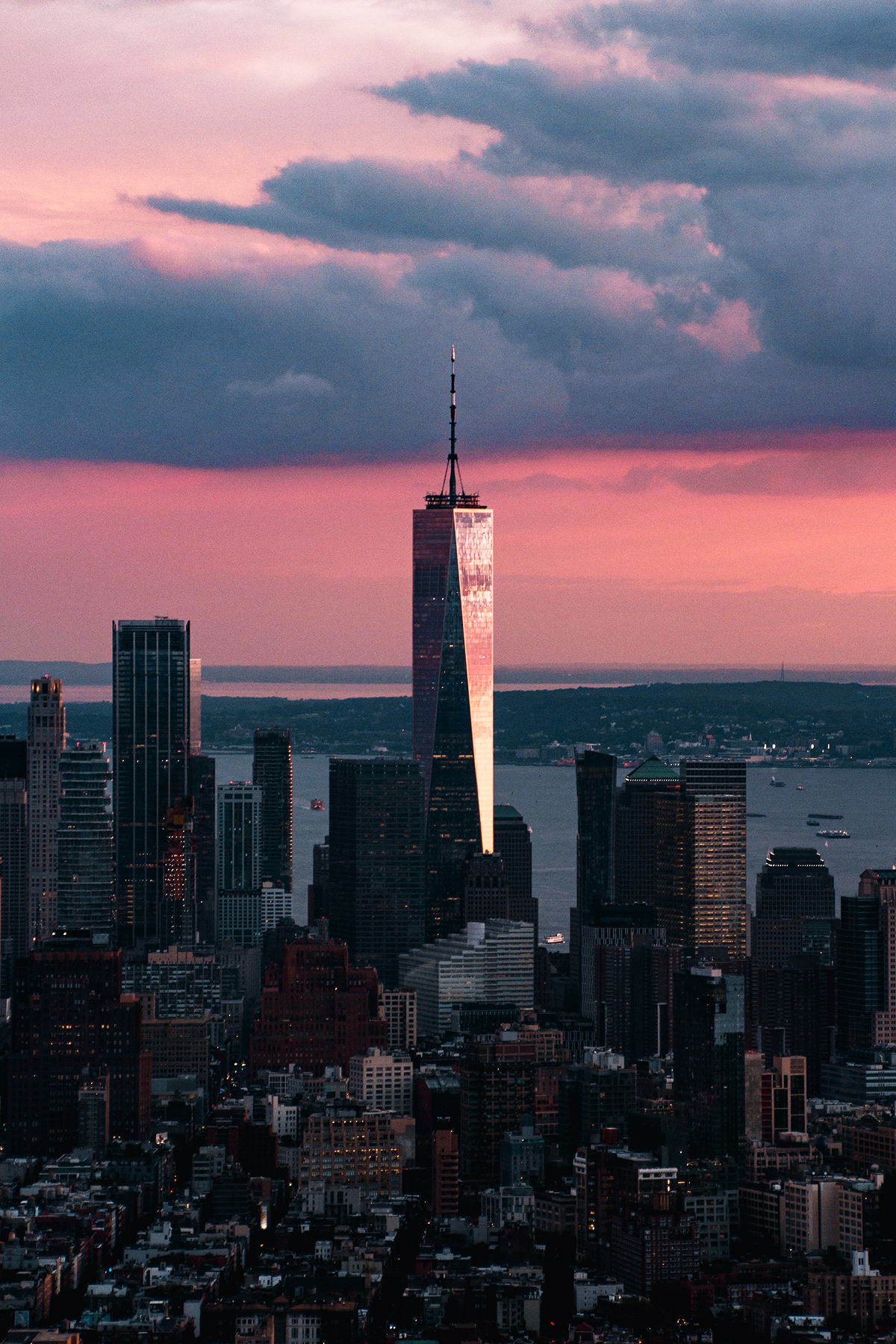
The façade reflects more than the sky. It picks up the Hudson, cloud cover, neighbouring buildings and the angle of the sun. On a clear afternoon, one face may glow while the adjacent face turns dark enough to reveal the triangular geometry. Under flat cloud, the tower can almost merge with the atmosphere.
For photography, that means weather is not merely a background condition. It changes the subject itself.
- Clear morning light gives cleaner edges and cooler blue glass from many western viewpoints.
- Late-afternoon light from New Jersey can bring warmth and depth to the west-facing composition.
- Broken cloud is often more dramatic than a perfectly clear sky because each facet reflects a different tone.
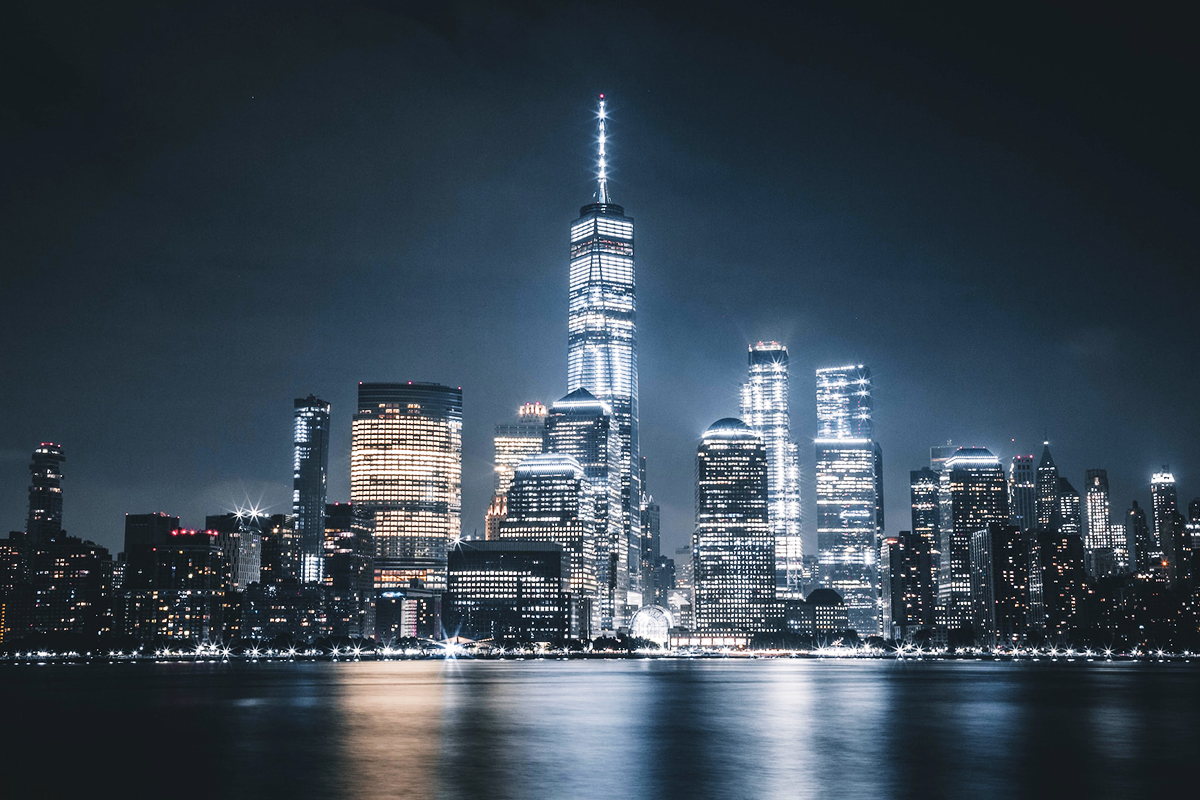
- Blue hour separates the illuminated building from the sky without turning the surroundings completely black.
- Low cloud or fog can hide the spire, which is atmospheric but unhelpful if the photograph needs to explain the full height.
The base is part of the story
At street level, the tower feels very different from its distant skyline profile. A tall, largely windowless podium responds to security requirements introduced during the redesign. The scale can feel defensive when viewed straight on. The exterior treatment breaks up that mass, but a close photograph still needs some thought.
I would not try to hide the base in every frame. Including pedestrians, street furniture or the edge of the Oculus gives the image scale and shows how a global landmark actually meets the pavement.
Safety and sustainability
One World Trade Center incorporated wider pressurised stairs, protected emergency systems, a high-strength concrete core and additional structural redundancy. Those features are not visually dramatic, but they are among the most consequential parts of the design.
The building contains roughly 3.1 million square feet of office space and holds LEED Gold certification. Port Authority materials describe systems including reclaimed rainwater and improved energy performance. Sustainability claims should still be read in context: constructing and operating a supertall tower requires enormous material and energy inputs. LEED certification identifies measured design achievements; it does not make a building impact-free.
Does One World Trade Center have 94 floors or 104?
Both numbers appear in reputable sources, which makes this one of the most common points of confusion.
The CTBUH database counts 94 above-ground floors under its standard methodology. SOM and the building’s marketing materials commonly describe One World Trade Center as a 104-story tower. The discrepancy comes from floor numbering, omitted numbers and the way mechanical and double-height spaces are treated—not from ten secret floors.
For a general travel guide, “104 stories” is recognisable and matches the building’s public identity. For a technical comparison, 94 is the consistent database count. I use both only when the distinction adds something; repeating one without context creates a needless factual argument.
Visiting One World Observatory
One World Trade Center is primarily an office building, so visitors do not wander through the tower itself. Public access is through One World Observatory, entered at 117 West Street on the west side of the building.
The experience occupies levels 100, 101 and 102. High-speed elevators reach the upper floors in roughly 47 seconds. The main attraction is a continuous indoor view over Lower Manhattan, New York Harbor, the Hudson and East rivers, Brooklyn, New Jersey and—on a clear day—far beyond the city.
Practical visitor information
| Question | What to know |
|---|---|
| Where is the entrance? | 117 West Street, separate from the office entrance at 285 Fulton Street |
| Is it outdoors? | No. The public observatory is enclosed behind glass |
| Do I need a timed ticket? | Timed admission is normally used; booking ahead is sensible at sunset and during holidays |
| What are the hours? | Hours change by season and event schedule; check the official site on the day you plan to go |
| How long should I allow? | About 60–90 minutes for an unhurried visit, longer if dining or waiting for changing light |
| Can weather ruin the view? | Yes. Low cloud, heavy rain or haze can erase much of the skyline even though the venue remains open |
| Are cameras allowed? | Handheld personal cameras are generally allowed; tripods, lights and professional production equipment require prior approval |
| Is it accessible? | The visitor experience is designed to be accessible; confirm any specific assistance directly before travelling |
Current tickets, hours and access rules are published on the official One World Observatory website. I would always check that page rather than relying on a price or timetable copied into a travel article months earlier.
The best time to visit
There is no single perfect time, because the best view and the quietest visit rarely occur together.
Morning usually means fewer people and cleaner windows in photographs, although Lower Manhattan can be backlit depending on the season and direction of view.
Late afternoon offers depth in the buildings and a chance to watch the city change from daylight to blue hour. It is also the most popular period, so tickets can be more expensive or sell out.
After dark produces the most graphic version of New York, with bridges, streets and towers reduced to lines of light. Reflections in the observatory glass become much harder to control.
My preferred strategy for an observation deck is to reserve a time roughly 45 to 60 minutes before sunset. That gives me daylight, sunset and early blue hour in one visit. I would only do this with a reasonably clear forecast. If the tower is inside cloud, the height record will not improve the view.
Getting there
The World Trade Center campus is one of the best-connected places in New York. PATH trains arrive beneath the Oculus, and multiple subway lines serve the World Trade Center and nearby Fulton Center complex. The E train terminates at World Trade Center; the R and W stop at Cortlandt Street; the 1 stops at WTC Cortlandt; and several additional lines stop within a short underground or street-level walk.
Service changes are common, particularly at weekends. I check the MTA’s current service status before setting out and use the World Trade Center transport guide to understand the campus connections.
Which New York observation deck is best?
“Highest” and “best” are different questions. One World Observatory wins for altitude and harbor views, but it is not the best choice for everyone—especially a photographer who wants open air.
| Observatory | Approximate height | Indoor or outdoor | Best for | Main limitation |
|---|---|---|---|---|
| One World Observatory | up to about 1,268 ft / 386.5 m | Indoor | Lower Manhattan, harbor, bridges and geographical overview | Window reflections; no open-air deck |
| Empire State Building | 86th: 1,050 ft; 102nd: 1,250 ft | 86th outdoor; 102nd indoor | Classic Midtown view and open-air atmosphere | Empire State Building is absent from your skyline photos |
| Edge | 1,131 ft / 345 m | Outdoor with indoor areas | Open-air height, Hudson Yards and Midtown | Glass panels, wind and crowds complicate photography |
| SUMMIT One Vanderbilt | around 1,100 ft / 335 m | Primarily indoor | Immersive installation, reflective interiors and close Midtown views | More staged attraction than neutral viewing platform |
Choose One World Observatory if…
You want to understand the geography of New York Harbor, see the Statue of Liberty from above, look down the Hudson, or compare the dense tip of Manhattan with the water surrounding it. It also provides the strongest high view of the 9/11 Memorial plaza, though the meaning of that view deserves restraint.
Choose the Empire State Building if…
You want wind, sound and the physical sensation of being outside above Midtown. Its 86th-floor deck is lower than One World Observatory, but the open-air experience can feel more immediate. It is also the better choice if your ideal skyline includes One World Trade Center far to the south.
Choose Edge if…
You want the highest outdoor platform and a dramatic western angle on Midtown. Its triangular deck projects from 30 Hudson Yards, creating compositions that include the Empire State Building and Lower Manhattan in the distance.
Choose SUMMIT if…
You want architecture, mirrors and installation art to be part of the photograph. It is visually controlled and highly reflective. That can be exciting, but it is a different experience from simply looking over the city.
How to photograph from One World Observatory
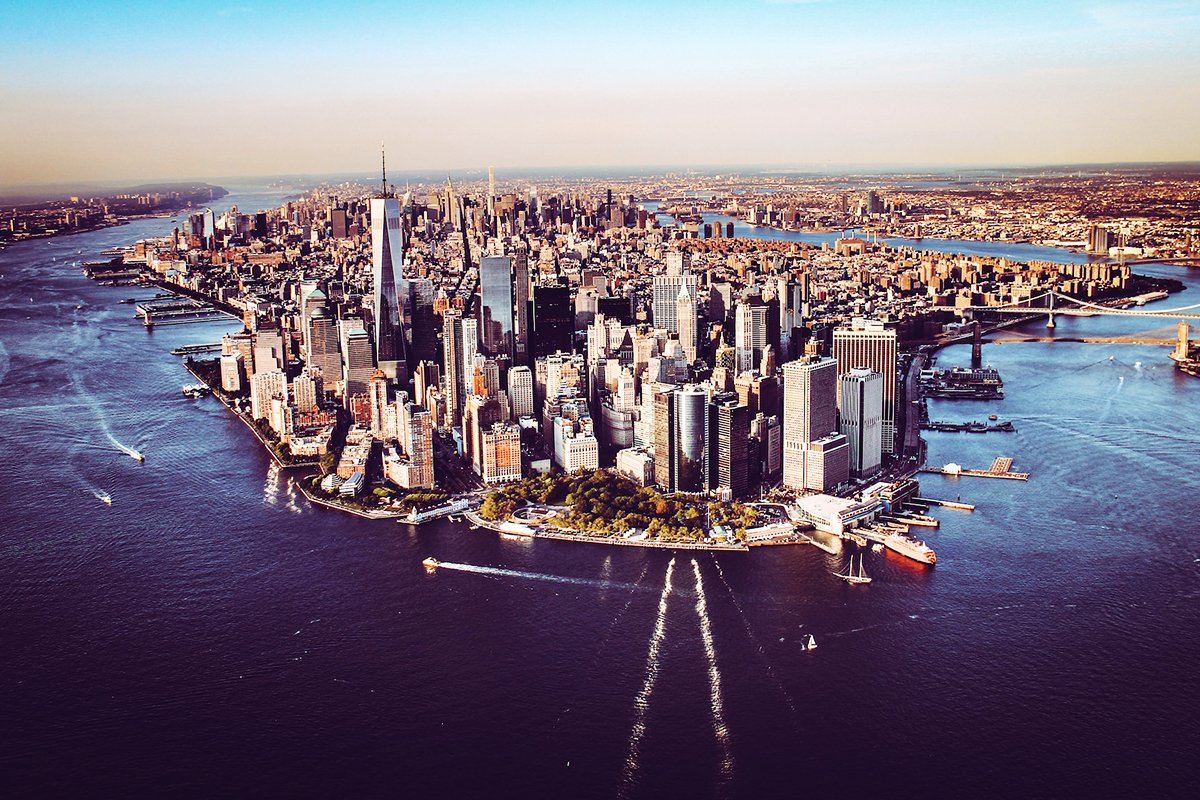
Shooting through glass is a small technical problem disguised as an easy view. The skyline is already there, but interior light, fingerprints and double reflections can flatten it quickly.
Bring less equipment, not more
Tripods are not normally allowed, and large professional setups may require prior permission. A compact camera or phone is easier to manage in a crowded indoor space.
My practical kit would be:
- a wide-to-normal zoom, such as 16–35mm or 24–70mm on full frame;
- a short telephoto for isolating bridges, rooftops and harbor traffic;
- a clean microfiber cloth;
- a flexible rubber lens hood if I expect to shoot after dark;
- a spare battery rather than a bag full of accessories.
Control reflections first
Place the lens hood close to the glass without pressing hard against it. Shade the space around the lens with a dark jacket or your free hand. Wear dark clothing if night photography is the priority; a white shirt can become the brightest object in the frame.
Turn off the flash. It cannot illuminate a city hundreds of metres away and will only create a white reflection.
A polarising filter can reduce some reflections in daylight, but its effect is inconsistent through treated multi-layer glass and it costs light. At very wide angles it may also darken the sky unevenly. I treat it as an option, not a cure.
Settings that work
| Situation | Starting point | Reason |
|---|---|---|
| Bright daylight skyline | ISO 100–200, f/5.6–f/8, 1/250 sec or faster | Sharp buildings and protected highlights |
| Blue hour handheld | ISO 400–1600, f/2.8–f/5.6, 1/125 sec or faster | Avoids camera shake without a tripod |
| Night city detail | Use the widest clean aperture, 1/125 sec minimum, raise ISO as needed | Sharpness matters more than perfectly clean shadows |
| Phone through glass | Night mode only if you can brace the phone; tap bright lights and lower exposure | Prevents signs and streetlights from clipping |
The observation deck is high enough that haze becomes an important part of the exposure. Dehaze can help later, but pushing it too far produces dark halos and artificial colour. I expose for bright cloud or sunset highlights, then lift the city carefully in editing.
The best places to photograph One World Trade Center
The strongest photograph is not necessarily made from the nearest pavement. One World Trade Center needs context: the memorial, the street, the harbor or the rest of the skyline. These locations are public or broadly accessible, but rules and construction conditions can change.
| Location | Best composition | Best light | Lens idea | Access note |
|---|---|---|---|---|
| 9/11 Memorial Plaza | Tower, trees and a restrained edge of a reflecting pool | Morning or blue hour | 24–50mm | Public; photograph respectfully and keep circulation clear |
| Liberty Park | Elevated view across the WTC campus | Morning to afternoon | 24–70mm | Public elevated park overlooking the memorial |
| Oculus / Church Street | White ribs against the dark tower | Midday geometry or blue hour | 16–35mm | Public exterior and transit space; security may restrict commercial setups |
| West Street | Low-angle façade and spire | Afternoon | 14–24mm | Busy pavement; do not step into cycle or traffic lanes |
| Brookfield Place / North Cove | Tower above marina masts and waterfront | Blue hour | 24–70mm | Public waterfront; private-property rules can apply to tripods |
| Hudson River Park, Tribeca piers | Tower separated from nearby buildings | Late afternoon and blue hour | 50–135mm | Public park; check current pier hours |
| Exchange Place, Jersey City | Clean Lower Manhattan skyline across the Hudson | Late afternoon, sunset and blue hour | 35–100mm | PATH-accessible public waterfront |
| Liberty State Park | Wide skyline, harbor and open foreground | Sunrise or blue hour | 35–135mm | Large public park; allow travel time within it |
| Staten Island Ferry | Moving harbor view with skyline context | Late afternoon or blue hour | 35–100mm, fast shutter | Free ferry; remain in public passenger areas |
| Brooklyn Bridge Park | Distant Lower Manhattan skyline | Blue hour; sunset can be strongly backlit | 70–200mm | Public park; One WTC is a smaller part of the frame |
1. The 9/11 Memorial Plaza
This is the closest meaningful context, and also the place where photography requires the most judgement. The memorial pools mark the footprints of the Twin Towers; the bronze parapets carry the names of the victims of the 2001 and 1993 attacks.
I would work quietly, avoid blocking anyone reading the names, and never treat the parapets as benches or props. A photograph does not need a dramatic pose to communicate the relationship between the memorial and One World Trade Center. Often a restrained frame—an edge of water, a row of trees and the tower rising beyond—is stronger.
The official 9/11 Memorial visitor information should be checked for current hours and any temporary restrictions.
2. Liberty Park
Liberty Park is a one-acre elevated public space on the south side of the World Trade Center campus. Its height opens views across the memorial and surrounding architecture without requiring a ticket.
It is useful for layers: planting in the foreground, the memorial below, the Oculus nearby and One World Trade Center above. The park is a place of reflection as well as a viewpoint, so the same respectful approach applies.
3. The Oculus and Church Street
Santiago Calatrava’s Oculus gives the tower a contrasting foreground. Its white structural ribs curve and repeat; One World Trade Center is faceted, dark and vertical. A wide lens can exaggerate that relationship, while a 35mm or 50mm view keeps the geometry calmer.
The most obvious frame is not always the best. I look for one clean rib or opening that leads the eye toward the tower instead of forcing the entire Oculus into the photograph.
4. West Street
From the west side of the site, the building rises almost directly overhead. This is where an ultra-wide lens earns its place. Keep the camera level if you want straight verticals, accepting more pavement in the foreground; tilt upward if converging lines are part of the image rather than an accident.
West Street is heavily trafficked, and the cycle path is not a tripod position. A safe frame from the pavement is more important than a perfectly centred one.
5. Brookfield Place and North Cove Marina
The marina places sailboat masts, water and lower buildings in front of the tower. That foreground makes the height legible without the extreme perspective distortion of a close view.
Blue hour is especially effective because the boats and office windows retain detail while the tower separates from the sky. Reflections on calm water can help, but this is a working waterfront; I do not assume every railing or terrace allows a tripod simply because it is open to pedestrians.
6. Tribeca’s Hudson River waterfront
Moving north along Hudson River Park gradually separates One World Trade Center from the cluster around it. Piers in Tribeca provide longer sightlines and room for runners, benches, railings or river traffic in the foreground.
A short telephoto compresses the tower against Lower Manhattan. This is often more flattering than an ultra-wide view because it preserves the building’s proportions.
7. Exchange Place in Jersey City
For a clear, classic Lower Manhattan skyline, I would start at Exchange Place. The PATH makes it easier to reach than many visitors expect, and the west bank of the Hudson offers room to move rather than locking the photographer into one composition.
In late afternoon, the sun is behind or beside the photographer and can warm the Manhattan-facing façades. Stay through blue hour: the tower’s spire and the waterfront lights become more distinct after the brightest colour has left the sky.
8. Liberty State Park
Liberty State Park provides a wider and quieter view than Exchange Place. One World Trade Center becomes part of the entire harbor landscape rather than the sole subject. A longer lens helps organise the skyline; a wide lens is more useful when the foreground—grass, railings, water or a path—has a clear role.
9. The Staten Island Ferry
The ferry gives a changing view of Lower Manhattan, not a fixed photo spot. That movement is the point. Use a shutter speed fast enough to protect detail, brace yourself without obstructing a door or passage, and expect wind or salt spray near open areas.
The ride also shows why One World Trade Center is such an effective marker: even as the skyline shifts, the spire keeps Lower Manhattan visually anchored.
10. Brooklyn Bridge Park
From Brooklyn, the tower is more distant and often competes with bridge structures, residential buildings and the rest of Lower Manhattan. That makes it a weaker location for a building portrait but a stronger one for a cityscape.
At sunset, the skyline may be backlit. I prefer blue hour from this side unless I specifically want silhouettes. A 70–200mm lens can isolate One World Trade Center; a wider view can connect it to the East River and Brooklyn waterfront.
Photography mistakes I would avoid
Treating an aerial image as an ordinary photo location
An aerial view may be visually impressive, but it is not a public viewpoint. Helicopter access, aircraft windows, commercial permissions and New York City’s strict drone rules make it a separate production, not a casual recommendation. A guide should never imply that a reader can reproduce an aerial photograph by walking to a nearby building.
Recommending private rooftops without explaining access
An office, residential roof or historic building may have an excellent view and no general public admission. The Woolworth Building, for example, is not an everyday public observation deck. I would only list a private location when there is a current tour, ticket or permission process that a reader can actually use.
Using only an ultra-wide lens
Close wide-angle frames make the tower look dramatic but can turn every photograph into the same converging triangle. A 50mm or telephoto view from across the river often explains the building more clearly.
Ignoring the spire
If the article is about the height record, cutting off the top removes the very feature that determines the title. There are good abstract photographs without the spire, but the hero image should show it cleanly.
Over-editing the glass
One World Trade Center naturally shifts between blue, silver and charcoal. Heavy saturation, clarity and dehaze can make the façade look metallic and brittle. I keep one neutral surface in the scene—a white cloud, grey pavement or the Oculus—to prevent the colour grade from drifting too far.
The 10 tallest completed buildings in New York City in 2026
The following list uses architectural height, the same measurement used to award the official title. Antennas are excluded; qualifying spires are included. Heights are rounded to the nearest foot or tenth of a metre.
| Rank | Building | Architectural height | Completed | Main use |
|---|---|---|---|---|
| 1 | One World Trade Center | 1,776 ft / 541.3 m | 2014 | Office |
| 2 | Central Park Tower | 1,550 ft / 472.4 m | 2020 | Residential |
| 3 | 111 West 57th Street | 1,428 ft / 435.3 m | 2021 | Residential |
| 4 | One Vanderbilt | 1,401 ft / 427.0 m | 2020 | Office |
| 5 | 432 Park Avenue | 1,397 ft / 426.0 m | 2015 | Residential |
| 6 | JPMorganChase Tower, 270 Park Avenue | 1,388 ft / 423.1 m | 2025 | Office |
| 7 | 30 Hudson Yards | 1,270 ft / 387.0 m | 2019 | Office |
| 8 | Empire State Building | 1,250 ft / 381.0 m | 1931 | Office |
| 9 | Bank of America Tower | 1,200 ft / 365.8 m | 2009 | Office |
| 10 | 3 World Trade Center | 1,079 ft / 329.0 m | 2018 | Office |
1. One World Trade Center
The only New York building above 500 metres by architectural height, and the city’s clearest skyline marker. Its long spire creates the record; its occupied tower ends much lower.
2. Central Park Tower
Central Park Tower is the tallest residential building in New York and the city’s tallest building to the roof. Its slender form rises above West 57th Street, part of the group commonly known as Billionaires’ Row.
3. 111 West 57th Street
Also called Steinway Tower, 111 West 57th Street combines a restored 1920s base with an exceptionally slender residential tower. Its setbacks and terracotta piers produce one of the most distinctive new profiles in Midtown.
4. One Vanderbilt
One Vanderbilt stands beside Grand Central Terminal. The tower includes SUMMIT, a multi-level visitor attraction near the top, making it one of the few supertalls in the ranking that the public can experience directly.
5. 432 Park Avenue
Its regular square windows and exposed structural grid made 432 Park Avenue the defining early image of the current supertall residential era. It is slightly shorter than One Vanderbilt by architectural height.
6. JPMorganChase Tower at 270 Park Avenue
Opened in 2025, the 1,388-foot JPMorganChase Tower is the newest building in the top ten. Its arrival is the main reason older tallest-building lists are now wrong: it entered directly at number six, ahead of 30 Hudson Yards and the Empire State Building.
7. 30 Hudson Yards
The office tower is best known to visitors as the home of Edge. Its observation deck projects from the building near the 100th floor and remains New York’s highest outdoor sky deck.
8. Empire State Building
The Empire State Building’s architectural height is 1,250 feet. Its antenna brings the absolute tip to about 1,454 feet, but antennas do not count in the standard ranking. Mixing that tip height with the architectural heights of other buildings is a common reason online lists become inconsistent.
9. Bank of America Tower
The Bank of America Tower at One Bryant Park reaches 1,200 feet through its architectural spire. It is prominent around Bryant Park but less visually dominant from a distance than its ranking suggests.
10. 3 World Trade Center
At 1,079 feet, 3 World Trade Center gives the rebuilt site a second supertall. Its exposed external bracing distinguishes it from the smoother glass surfaces of One and Four World Trade Center.
Could another building take the title?
New York’s skyline is not finished, but completed buildings and proposals must be kept in separate lists.
The planned 350 Park Avenue office tower has moved through New York City’s land-use process at a proposed height of about 1,600 feet. If it is built to that height, it would overtake Central Park Tower and likely become the city’s tallest roof. It would still remain below One World Trade Center’s 1,776-foot architectural top unless the final design changes substantially.
That is the important conditional: a rendering is not a record. Designs, schedules and heights can change before construction is complete. I would update the ranking only when a building qualifies under the Council’s completed-building criteria.
For now, One World Trade Center keeps the official title it has held since reaching full height in 2013.
A respectful way to combine the tower and memorial
A visit to One World Observatory and a visit to the 9/11 Memorial are not the same experience, even when they happen within an hour of each other.
The observatory is a commercial attraction: timed entry, fast elevators, screens, dining and a panoramic reveal. The memorial is free public space centred on the names of people who were killed. The museum is a separate ticketed institution preserving the history of the attacks and their aftermath.
I would not rush directly from a loud attraction into the memorial while treating both as entries on a sightseeing checklist. Allow time. Put the camera down when the situation calls for it. Read the names. Notice that families, survivors and local workers may be present for reasons that have nothing to do with tourism.
This does not mean the site should never be photographed. It means the picture is not more important than the place.
Frequently asked questions
What is the tallest building in New York City?
One World Trade Center is the tallest completed building in New York City by official architectural height. It is 1,776 feet, or 541.3 metres, tall.
Is One World Trade Center taller than Central Park Tower?
Yes by architectural height, because One World Trade Center’s permanent spire counts. No by roof height and highest occupied floor: Central Park Tower’s roof reaches 1,550 feet, while One World Trade Center’s occupied tower ends much lower.
Is One World Trade Center taller than the Empire State Building?
Yes. One World Trade Center is 1,776 feet by architectural height; the Empire State Building is 1,250 feet. The Empire State Building’s antenna raises its tip to about 1,454 feet, but that is still lower and does not count in the standard architectural ranking.
How many floors does One World Trade Center have?
It is commonly described as a 104-story building. The CTBUH database counts 94 above-ground floors under its technical methodology. The difference comes from numbering and how mechanical or double-height spaces are counted.
Can the public go to the top?
The public can visit One World Observatory on levels 100–102. The spire and office floors are not public. Admission is ticketed through the observatory’s official website.
Is One World Observatory outdoors?
No. It is fully enclosed behind glass. For an outdoor observation deck, choose Edge or the 86th floor of the Empire State Building.
Is One World Observatory the highest observation deck in New York?
It is New York’s highest indoor public observatory, at roughly 1,268 feet. Edge is the city’s highest outdoor sky deck at 1,131 feet.
What is the best time to visit One World Observatory?
For varied light, arrive 45–60 minutes before sunset and stay into blue hour. Morning is usually calmer. Always check cloud height and visibility first; haze or low cloud can hide most of the view.
Can I bring a camera?
Handheld personal cameras are generally allowed. Tripods, lighting and professional production equipment require advance permission or may be prohibited. Check the current guest code before visiting.
Where is the best place to photograph One World Trade Center?
Exchange Place in Jersey City gives the cleanest full-skyline view. The 9/11 Memorial plaza provides the most meaningful close context, and Brookfield Place adds water and marina foregrounds. The best choice depends on whether the photograph is about the building, the skyline or the site’s history.
Is Freedom Tower the same building?
Yes. Freedom Tower was the widely used early project name. The official name is One World Trade Center.
Is One World Trade Center the tallest building in the United States?
Yes, by architectural height. It is also described by the Port Authority as the tallest building in the Western Hemisphere.
Is it the tallest building in the world?
No. In the Council’s 2026 ranking of completed buildings by architectural height, One World Trade Center is seventh. Burj Khalifa in Dubai remains the tallest.
Final thoughts
One World Trade Center’s record is both straightforward and qualified. At 1,776 feet, it is officially the tallest building in New York City and the United States. Its spire is architecture, so the height counts. Central Park Tower, however, has the higher roof and places its residents higher above Manhattan than One World Trade Center places its office workers or observatory visitors.
That distinction makes the answer better, not weaker. New York’s skyline has always been shaped by competition, regulation, engineering and a certain amount of theatre. The measuring rules reveal all four.
For me, the most useful way to see the tower is at two scales. Stand near the memorial and it becomes part of a complicated, specific place. Cross the Hudson and it becomes a line in the skyline again: slender, reflective and unmistakable, the building that still decides where Lower Manhattan begins.