
On Sunday, 26 March 2023, I looked back at a week divided between old photographs and new work. I edited aircraft from Hangar-7, took my camera to Metelkova in Ljubljana, prepared an interview with sports photographer Matic Hladnik and tested a better way to show what happens between an original file and a finished photograph.
The week did not produce one neat project. It produced several connected experiments: black and white, street photography, long-form conversation and a Lake Jasna before/after pair.

The week at a glance
| Work | What I did | What it changed |
|---|---|---|
| Hangar-7 archive | Edited and published my first group of black-and-white aircraft photographs | Made me consider a larger monochrome gallery |
| Metelkova | Photographed the alternative cultural centre and its street art on Friday | Created new material for a Ljubljana photo story and editing study |
| Matic Hladnik interview | Spent two days editing the conversation and Planica gallery | Shifted my attention from my own photographs to another photographer’s path |
| Before/after presentation | Tested a comparison format on the site | Gave readers a clearer way to inspect editing decisions |
| Lake Jasna | Revisited a 22 June 2019 file in Lightroom | Became the first image used for that comparison |
This page preserves the review as an archive. References to “next week” belong to March 2023, not to the present day.
Revisiting Hangar-7 in black and white
I spent several days editing photographs from Hangar-7 in Salzburg. The building and its aircraft offer an obvious amount of colour: polished surfaces, Red Bull liveries, museum lighting and a glass structure reflecting the sky. My first instinct had often been to preserve that colour.
During this week, I published my first group of Hangar-7 photographs in black and white. That was new territory for me. Removing colour made me pay more attention to the aircraft’s silhouette, the relationship between metal and glass, and the geometry of the building around it.
I thought the first results looked promising enough to continue. At the time, I was already considering more monochrome images or a complete black-and-white gallery. The important change was not the style itself. It was learning to ask whether colour carried essential information in each frame.
What I learned from the conversion
A black-and-white edit cannot rely on desaturation alone. Colours that appear separate may collapse into similar grey values. I had to rebuild the image through tonal contrast: control bright reflections, preserve detail in dark aircraft parts and decide how strongly the hangar structure should remain visible.
The experiment later fed directly into my Lightroom case study of a Fairchild PT-19. One archive was beginning to create the next article.
Friday at Metelkova
On Friday, I was in Ljubljana and photographed Metelkova. At the time of this weekly review, I had not yet studied the files closely. That uncertainty is an ordinary part of photography. The energy of taking pictures and the quieter judgement of editing do not always happen on the same day.
Metelkova attracted me because street art there feels layered and alive. One painted surface interrupts another; doors, walls, posters and objects all compete. The challenge is not finding colour. It is deciding where the photograph begins and ends.
I hoped the material would become a new gallery the following week. Later, one of those graffiti photographs also became a focused Lightroom edit in which I shifted orange and yellow toward orange-red, changed teal toward blue and deepened the black. The weekly walk therefore became both a location story and an editing case study.
Editing the interview with Matic Hladnik
I spent the final two days of the week editing an interview with sports photographer Matic Hladnik from Kranjska Gora. His story covered how he became a photographer, what he most likes to photograph and his work from the 2023 Nordic World Ski Championships in Planica.
Interview editing demands a different kind of attention from image editing. A photograph asks which visual information matters. A conversation asks which words preserve the speaker’s meaning, where context is needed and how much repetition can be removed without replacing the person’s voice with mine.
Working on someone else’s photographs also interrupts the isolation that can develop around my own archive. It gives me another set of choices to study: access, timing, subject knowledge and the practical demands of sport.
The interview with Matic Hladnik remains part of the site’s interview archive.
Why I wanted a before-and-after comparison
I was exploring a plugin that could let readers move between an original photograph and the edited result. Writing about editing without showing the starting file leaves out important evidence. A finished image can look simple only because the work is hidden.
The comparison was not meant to prove that the largest change is the best edit. It was meant to make decisions visible:
- how exposure was balanced;
- how colour was directed;
- whether a crop improved the composition;
- where contrast was added or reduced;
- how the final mood differed from the recorded file.
The old plugin is no longer necessary on this page. The actual before and after files are shown independently below, so they remain visible on mobile devices and without special JavaScript.
Lake Jasna before and after
I made this photograph at Lake Jasna on 22 June 2019 and later edited it in Adobe Lightroom. It became my first practical before-and-after test for the site.
Before
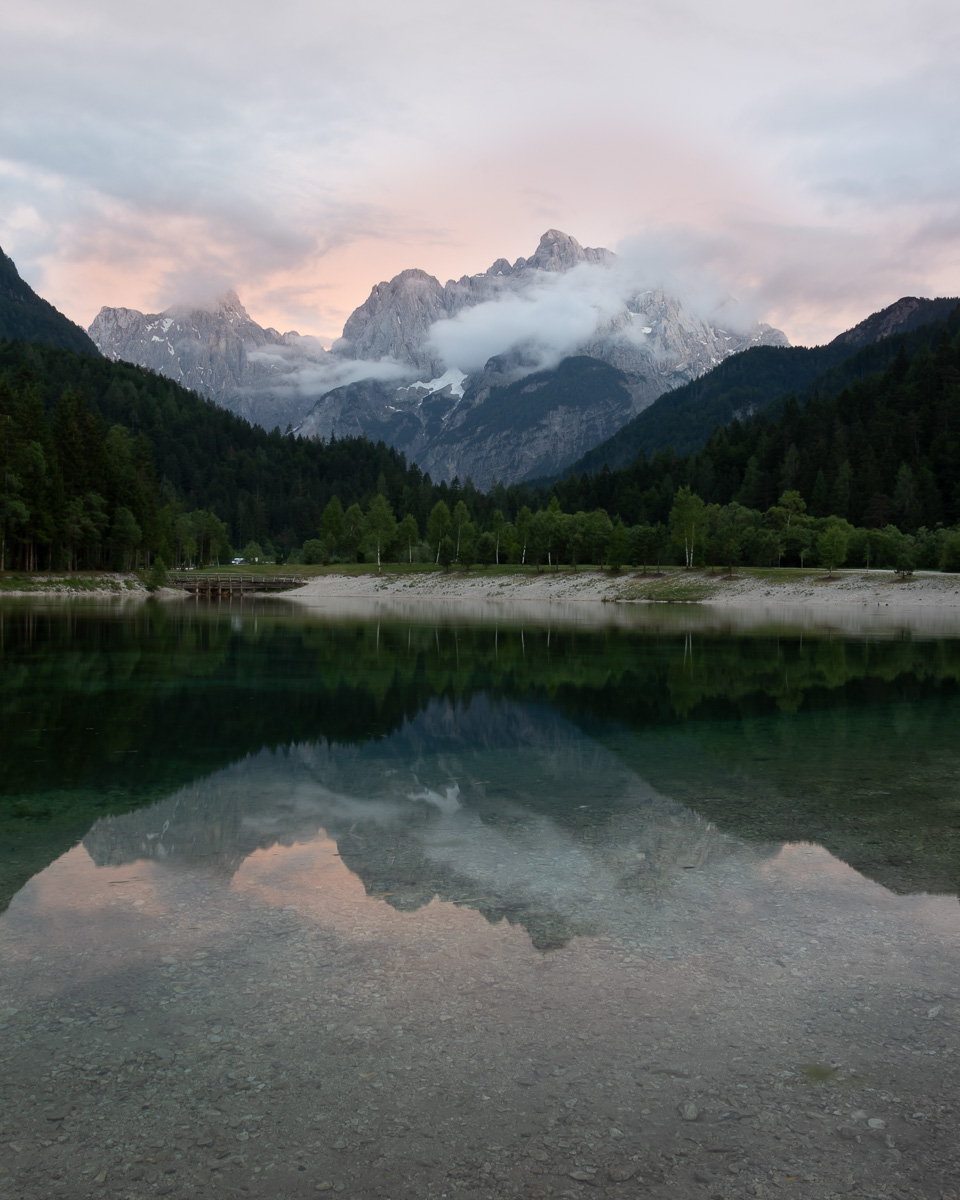
The original is the camera’s starting material. It contains the scene, exposure and colour relationships that were available to the RAW file. Looking at it beside the final result makes it easier to separate capture from interpretation.
After
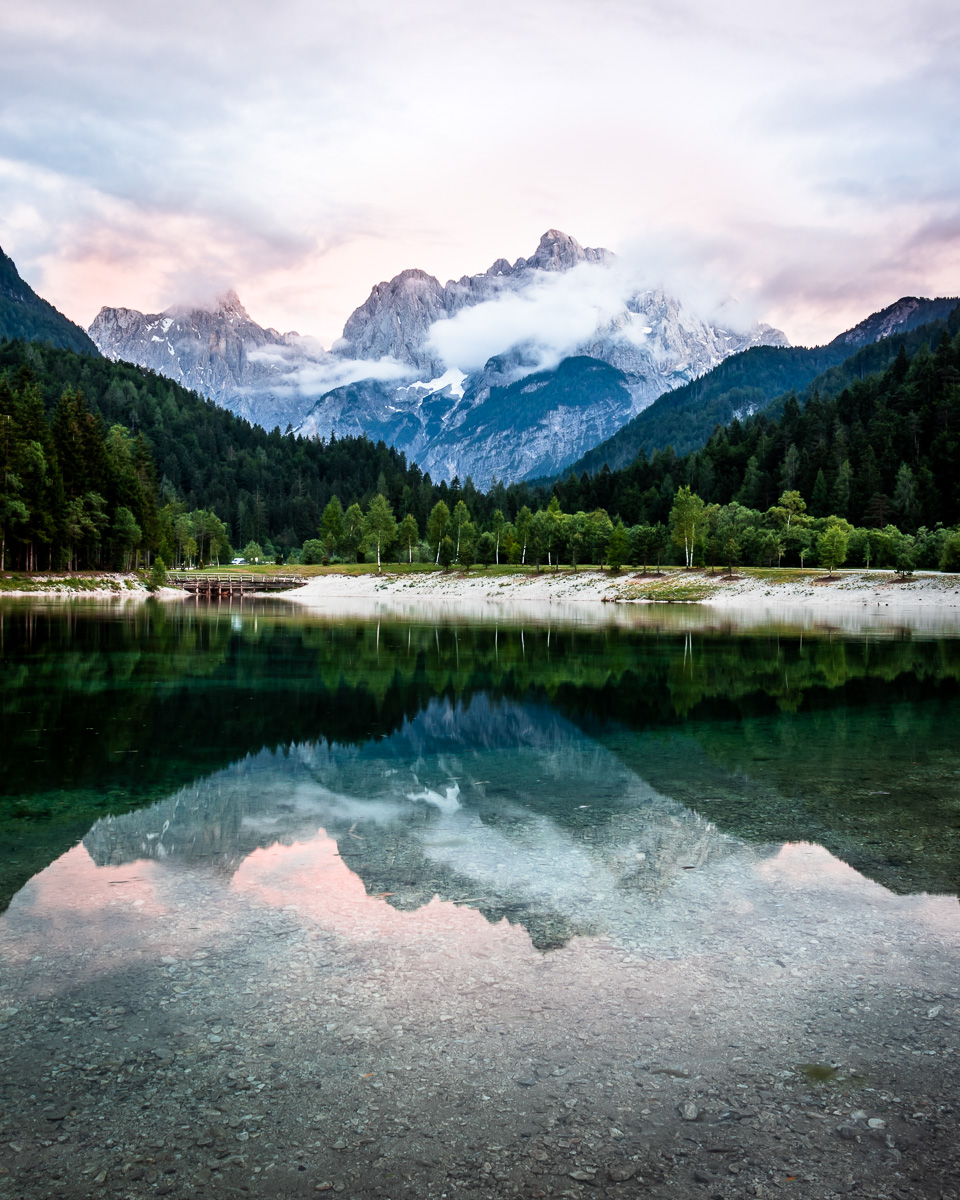
The edited version reflects what I wanted from the photograph rather than a universal definition of correct colour or contrast. Another photographer might make a quieter file, a warmer one or almost no change at all.
How much do I edit my photographs?
My short answer in 2023 was: I edit them until I like them.
I still recognise the honesty of that sentence, but “like” is not as arbitrary as it sounds. It usually means that the photograph has reached a balance in which the subject is clear, the colour feels coherent, distracting tonal problems are controlled and the editing no longer calls attention to itself.
Some photographs need only white balance, exposure and a crop. Others require local masks, careful colour work or a more interpretive treatment. The amount of work is not a measure of quality. A five-minute edit can be complete; a two-hour edit can still be confused.
My stopping questions
Before I consider an image finished, I ask:
- Does my eye go to the intended subject first?
- Have I preserved important highlight and shadow detail?
- Do the colours support the scene rather than advertise the software?
- Can I see halos, mask edges or excessive sharpening?
- Does the image still work at normal viewing size?
- Is the latest adjustment actually better than the previous version?
The final question is often the most useful. Editing can continue simply because the tools are available. If a new change does not improve the photograph, I go back.
What connected the week
The week’s projects looked different: historic aircraft, Ljubljana graffiti, a sports-photography interview and an alpine lake. The connection was editing as a form of selection.
At Hangar-7, I selected tone over colour. At Metelkova, I selected frames from a visually crowded place. In the interview, I selected the structure that let another photographer’s story remain clear. At Lake Jasna, I selected which differences between the original and final file were worth showing.
That is what I wanted these weekly reviews to preserve. Finished galleries can make photography look like a sequence of conclusions. The real work is usually a sequence of partial decisions, doubts and experiments that begin to connect only when I look back.