
My friend Grega Donša, who leads Europe Direct Pomurje, invited me to photograph an event organised by the local centre at MIKK Murska Sobota. The speakers presented routes that can otherwise feel scattered across European websites: mobility opportunities for young entrepreneurs, employment support through EURES and tools for describing skills and qualifications through Europass.
The event was local, but the subject was movement — between education and work, between one country and another, and between an idea and the institution that can answer the next practical question.
This article combines two things: my photographic record of that 2023 event and current links for readers who actually want to use the services. Europe Direct, EURES and Europass are connected by European mobility and information, but they do different jobs.
Europe Direct Pomurje at a glance
| Detail | Information |
|---|---|
| What it is | A local EUROPE DIRECT information centre serving Pomurje |
| Host organisation | Mladinski informativni in kulturni klub Murska Sobota (MIKK) |
| Location | Trubarjev drevored 4, 9000 Murska Sobota, Slovenia |
| Centre lead | Grega Donša |
| Main role | Information, dialogue and local activities concerning the European Union |
| Cost of service | Free |
| Official local page | Europe Direct Pomurje |
| Related tools in this story | EURES and Europass |
The current contact details should always be checked on the official page before visiting or sending documents. Europe Direct can answer general EU questions and guide people toward relevant sources, but its information is not a substitute for legally binding advice from the competent authority.
What happened at the event
The event gathered information that becomes easier to understand when a person can ask a direct question. A web portal can list programmes and eligibility rules; a local presentation can explain which route belongs to a jobseeker, student, new entrepreneur or employer.
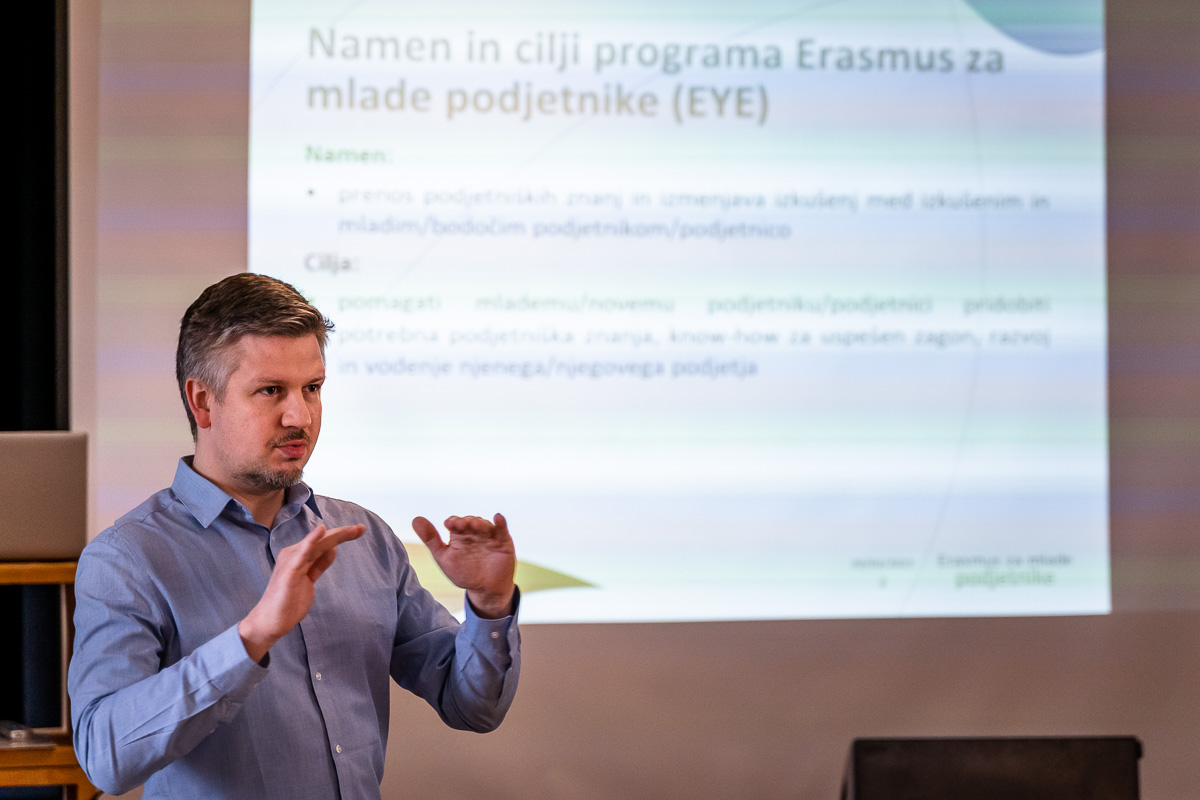
The speakers addressed mobility programmes for young entrepreneurs as well as EURES and Europass. These names often appear together, but a useful summary is simple:
| Service | Primary purpose | A practical first use |
|---|---|---|
| Europe Direct | General EU information and local public dialogue | Ask where to find the official source or responsible service |
| EURES | Employment mobility across participating European countries | Search vacancies and learn about living and working conditions |
| Europass | Career and learning profile/document tools | Create a CV, cover letter or record of skills and qualifications |
None of the three makes a decision for the user. They reduce the distance between a question and a reliable next step.
What EUROPE DIRECT centres do
The European Union describes its EUROPE DIRECT centres as a network that brings EU information closer to local communities. The centres listen, inform and create space for conversations about how European policies affect daily life.
That can include public discussions, school activities, exhibitions, debates, workshops and guidance toward official information. The service is useful when the first difficulty is not completing an application but knowing which institution, programme or portal is relevant.
A local centre cannot guarantee funding, employment or admission. It can help clarify language, identify official channels and prevent a reader from relying on an outdated or unofficial summary.
A local point of contact
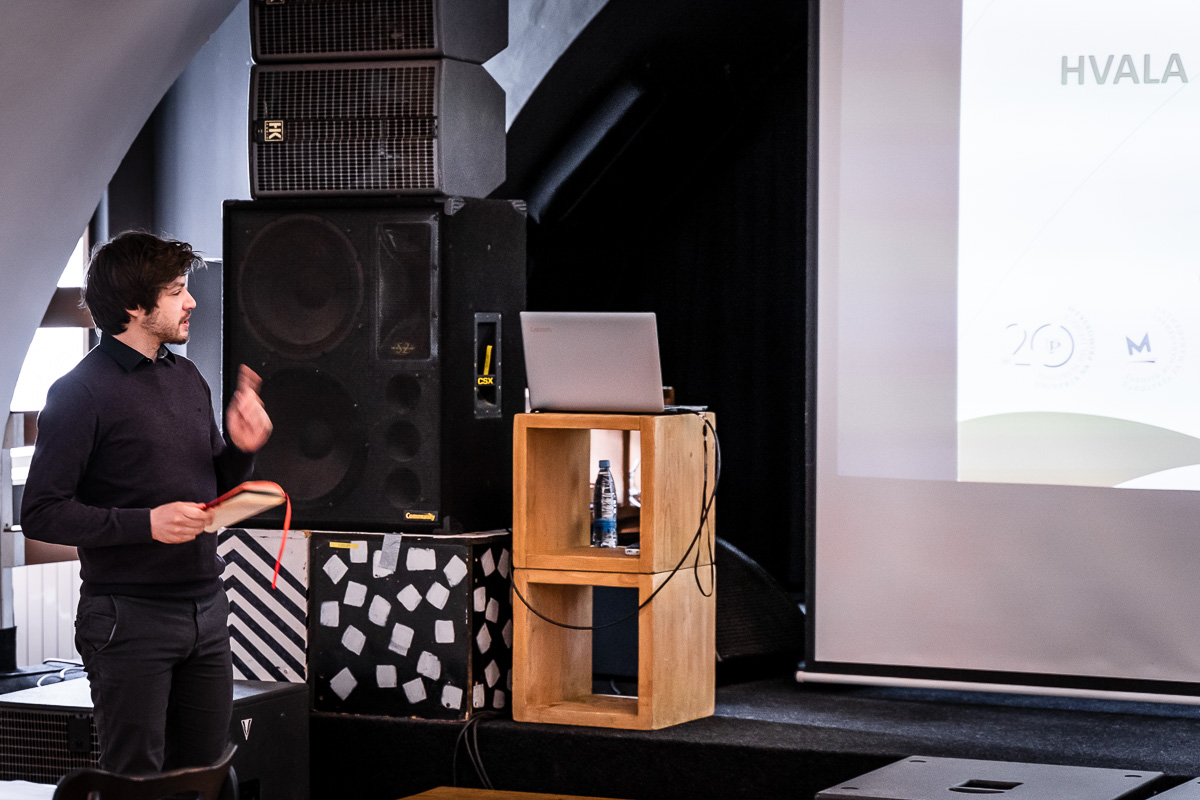
Grega’s invitation was also the reason I saw the subject as more than an abstract European programme. Local information work depends on people who can translate large institutional structures into a conversation in Murska Sobota.
The centre’s current official page lists MIKK as its host organisation. Visitors can begin with the Europe Direct Pomurje contact page and confirm opening or appointment arrangements before travelling.
Where to find Europe Direct Pomurje
The listed address is Trubarjev drevored 4, 9000 Murska Sobota. The centre is part of MIKK rather than a separate European institution building, so searching for either name can help with orientation.
What EURES does
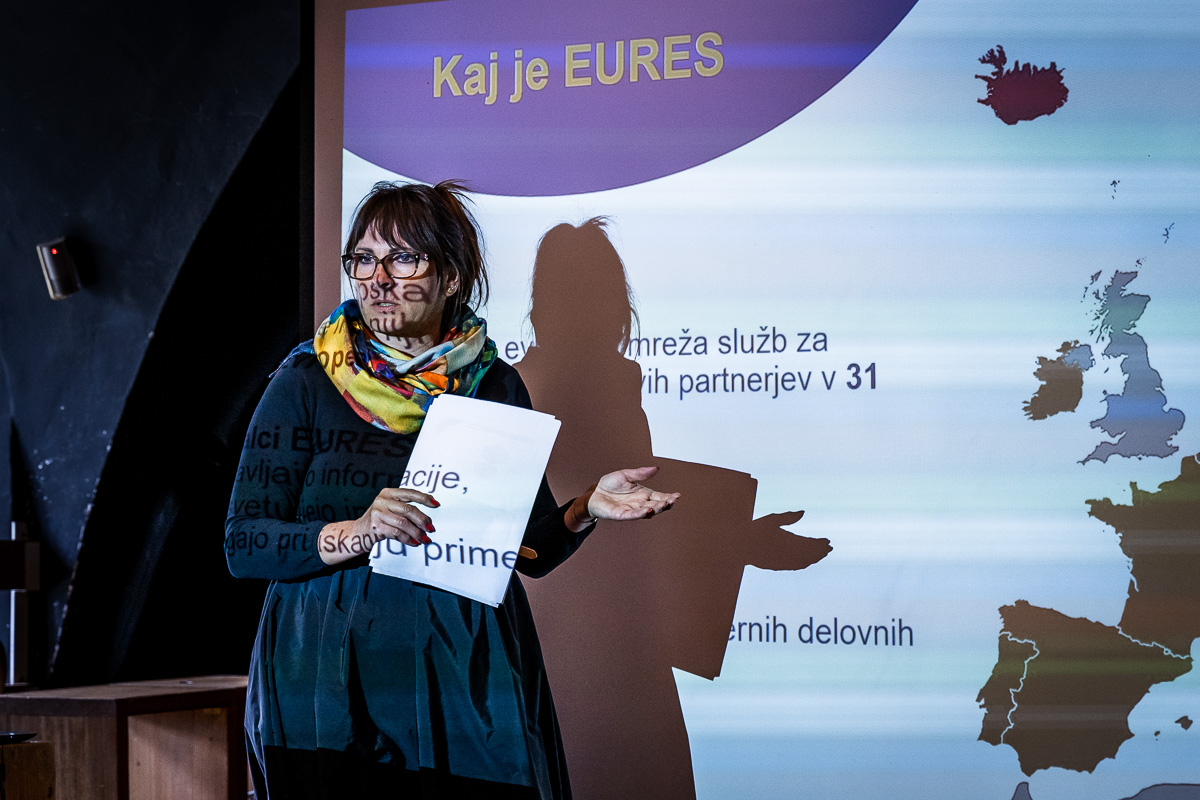
EURES stands for European Employment Services. Its portal and network support people who want to work across participating European countries and employers seeking candidates.
For a jobseeker, the official EURES service brings together:
- job vacancies;
- information about living and working conditions;
- labour-market information;
- European Job Days and recruitment events;
- access to EURES advisers;
- guidance before, during and after a move for work.
The service covers practical questions that a vacancy alone does not answer: accommodation, taxation, social security, healthcare, recognition and conditions in the destination country. The same speaker returned to exactly that list later in the evening, under the heading “what to do in a new country” — registering residence, arranging a tax and social security number, signing the employment contract, finding accommodation and contacting an EURES adviser. It is the photograph at the top of this article. The details can be legally and personally significant, so I would use EURES as an official starting point and confirm final obligations with the relevant national authority.
For employers, EURES provides routes to advertise vacancies, reach candidates across borders and speak with advisers about international recruitment.
What Europass does
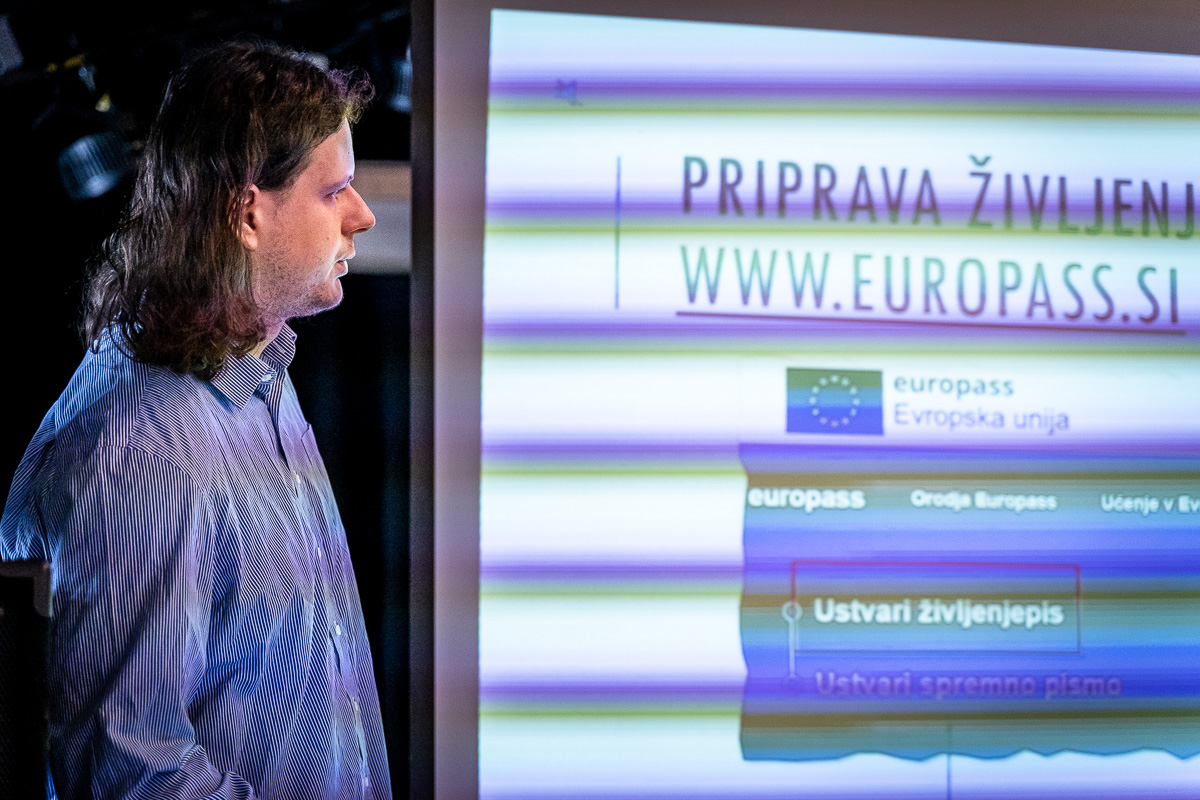
Europass is a free set of online tools developed by the European Commission for managing learning and career information. The best-known element is the Europass CV, but the platform is broader than one document.
Users can create a profile, record work and education, organise skills and achievements, build CVs and cover letters, and explore job or learning opportunities. The value is consistency: the same structured information can be adapted for a particular application instead of writing one enormous CV for every purpose.
I would still tailor a Europass CV to the role. A tool can organise information; it cannot decide which experience is most persuasive for one employer. The strongest application usually selects relevant evidence rather than listing everything equally.
EURES and Europass together
EURES and Europass can connect. A person can organise skills and application material in Europass, then use EURES to explore vacancies and employment mobility. They are complementary, not interchangeable.
How I photographed the event
Indoor event photography asks the camera to solve several problems at once. The room at MIKK had limited natural light, cloudy conditions outside and several artificial light sources with different colours. Faces could pick up green, magenta, orange or blue casts depending on where a person stood.
For many photographs, I worked around this setup:
| Setting | Representative value |
|---|---|
| Camera | Sony a7 III |
| Lens | Tamron 28–75mm f/2.8 |
| Focal length | 75mm |
| Aperture | f/2.8 |
| Shutter speed | 1/100 s |
| ISO | 1600 |
The 75mm end let me photograph expressions and gestures without standing immediately beside the speaker. The f/2.8 aperture admitted more light and separated the subject, while 1/100 s was a compromise between handholding, human movement and the available exposure.
ISO 1600 gave me the brightness I needed, but I could see image quality becoming more fragile in my files. That is my practical observation from this camera and situation, not a universal failure point for every Sony a7 III. A correctly exposed high-ISO file can be better than a darker file lifted aggressively later.
Mixed light and natural-looking colour
My aim was photojournalistic. The photographs needed to remain believable records of the event. That did not mean leaving every colour cast untouched; it meant correcting distracting casts without giving every face an artificially identical tone.
I used a restrained sequence:
- Choose a workable global white balance from the primary light on the speaker.
- Protect faces and presentation screens from clipped highlights.
- Open shadows only enough to show the room.
- Use local colour corrections where one light source created an obvious cast.
- Apply noise reduction without erasing facial detail.
- Compare a set of photographs together so skin and room colour remain consistent.
Mixed light cannot always be made perfect. If one side of a face receives green light and the other receives warm light, one global slider cannot neutralise both. The honest solution is often a moderate correction rather than a polished result that no longer resembles the room.
The projected screen adds a second problem. A projector is a bright, saturated light source pointed at a white surface, so it clips easily and pulls its own colour into everything near it. In several of these frames the readable slide was the point of the photograph, which meant exposing so the text survived and accepting a darker room around it.
What I took from the evening
The practical value of this Europe Direct Pomurje event was concentration. EURES, Europass and entrepreneurship mobility can each become a separate research project. Hearing them introduced together gave the audience a map of where to begin.
For me, the photographic challenge echoed the subject. The room was not visually simple, but the job was to make the essential information legible: who was speaking, what people were listening to and how a local organisation created access to something much larger than the room.
Anyone looking for current help should begin with the official centre, EURES or Europass link that matches the question. My photographs record one event. Those services are where the next action happens.