
The tallest building in Chicago is Willis Tower, the dark, stepped skyscraper that generations of Chicagoans still call Sears Tower. Its official architectural height is 1,451 feet, or 442.1 metres. It stands in the Loop at 233 South Wacker Drive and remains taller than every other completed building in the city.
That is the short answer. The more interesting answer begins with a measurement problem. Willis Tower is 1,451 feet tall in the ranking that matters, but it reaches 1,729 feet, or 527 metres, at the tip of its antennas. Its highest occupied level and observatory are lower again, at 1,354 feet. All three figures can be correct, but they describe different parts of the same building.
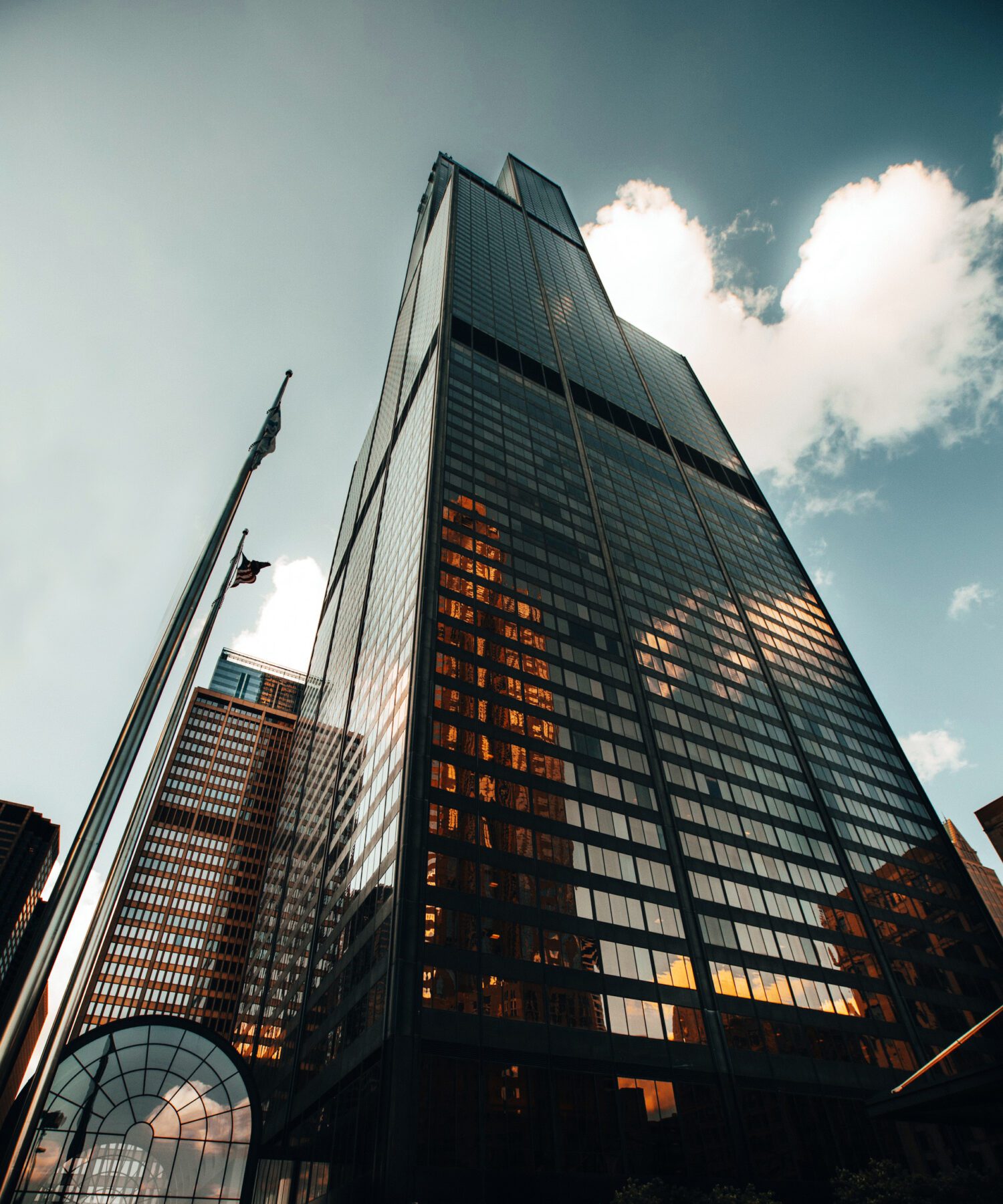
When I first came across the tower, I thought it looked like a building designed for Batman: black, severe and unlike the glass needles that now define many modern skylines. I still think that first impression gets at part of its appeal. Willis Tower is not elegant in a fragile way. Its form is legible and muscular. You can see nine structural tubes gathering at the base and ending at different levels as the building climbs.
This guide starts with the fact behind the keyword, then goes further. I explain how skyscraper height is measured, compare Willis Tower with Chicago’s current top ten, trace the Sears-to-Willis history, look closely at its bundled-tube structure and give practical information for visiting and photographing Skydeck. The figures and visitor details were checked against official sources on 13 August 2026. The photographs on this page are not my own work; I have not claimed a visit to the tower.
Tallest building in Chicago: the answer at a glance
| Question | Answer |
|---|---|
| What is the tallest building in Chicago? | Willis Tower, formerly Sears Tower |
| Official architectural height | 1,451 ft / 442.1 m |
| Height to antenna tip | 1,729 ft / 527 m |
| Highest occupied floor and observatory height | 1,354 ft / 412.7 m |
| Official floor count used by the ranking body | 108 above ground, plus 3 below ground |
| Floor count used by the building | 110 stories |
| Chicago rank | No. 1 |
| United States rank at the August 2026 update | No. 3 |
| Address | 233 South Wacker Drive, Chicago, Illinois 60606 |
| Original name | Sears Tower |
| Opened | 1973 |
| Completion year used by the ranking database | 1974 |
| Architect and structural engineer | Skidmore, Owings & Merrill; architect Bruce Graham and engineer Fazlur Rahman Khan |
| Public observation deck | Skydeck Chicago, 103rd floor |
The rankings and measurements in this table follow The Skyscraper Center’s Willis Tower record. The database is maintained by the Council on Vertical Urbanism, the organisation formerly known as the Council on Tall Buildings and Urban Habitat, or CTBUH.
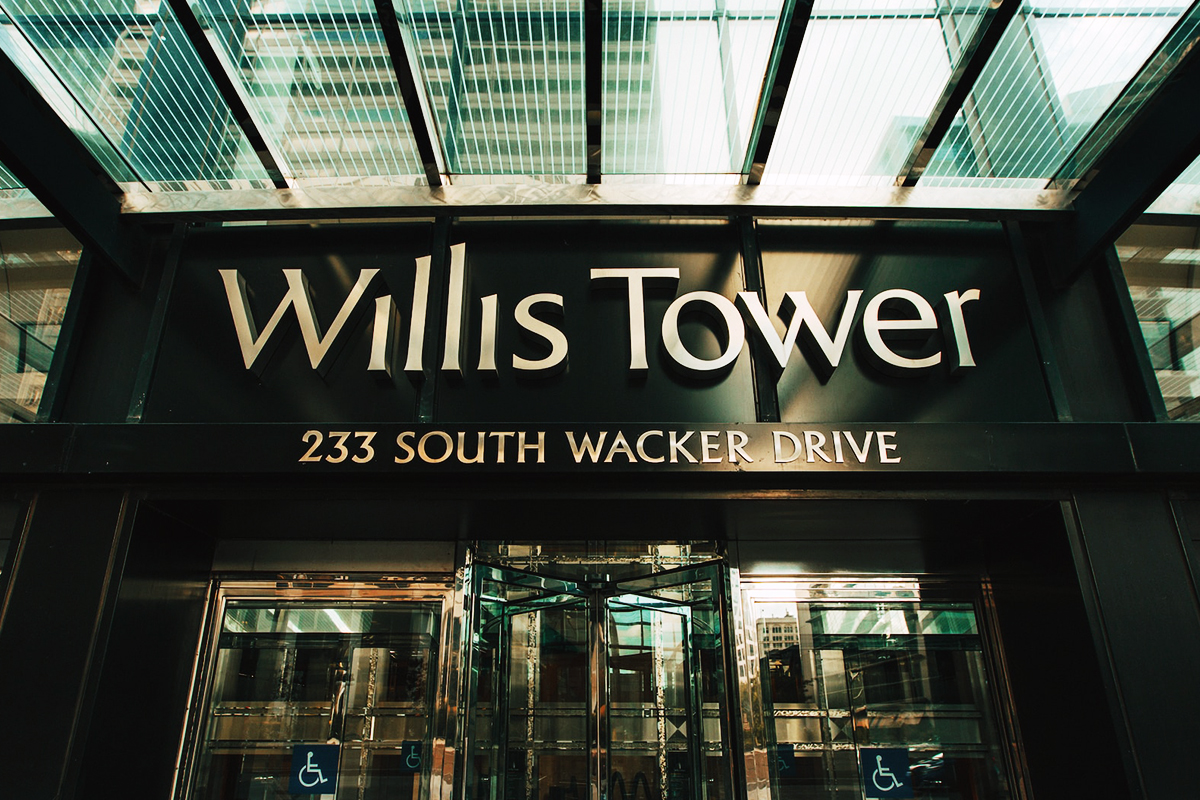
How tall is Willis Tower?
Willis Tower’s standard architectural height is 442.1 metres, or 1,451 feet. That is the number used to compare it with Trump International Hotel & Tower, The St. Regis Chicago and other skyscrapers. It includes permanent architectural elements but excludes functional antennas.
The tower’s total height to its highest tip is 527 metres, or 1,729 feet. This figure includes the antennas. The highest occupied floor is 412.7 metres, or 1,354 feet, which is also the height recorded for its observatory.
Those numbers are not interchangeable. A page that calls Willis Tower 1,729 feet tall without mentioning the antennas makes it sound much taller in the official building rankings than it is. A page that gives only 1,354 feet is measuring the highest occupied level, not the architectural top.
The three Willis Tower height measurements
| Measurement | Height | What it includes | Best use |
|---|---|---|---|
| Architectural height | 1,451 ft / 442.1 m | Permanent architectural top; antennas excluded | Official skyscraper and city rankings |
| Highest occupied floor | 1,354 ft / 412.7 m | Highest level people normally occupy | Describing the Skydeck level and usable height |
| Height to tip | 1,729 ft / 527 m | Everything, including antennas | Describing the structure’s absolute highest point |
The architectural measurement is not an arbitrary choice invented to favour one tower. It is the internationally recognised category most commonly used to rank buildings. Spires count because they are considered part of the design; antennas, flagpoles, signs and other functional equipment do not. The official height criteria also recognise height to the highest occupied floor and height to the tip as separate categories.
Why do some sources say 108 floors and others say 110?
The same kind of discrepancy appears in the floor count. Willis Tower describes itself as a 110-story building, and that is the number most visitors know. The Skyscraper Center records 108 floors above ground plus three below ground because its standardised method counts major floors differently from a building’s own marketing or operational convention.
Neither number changes the answer to the main question. Willis Tower remains Chicago’s tallest completed building. The useful habit is to state which system a number comes from instead of blending the systems together.
Is Willis Tower still the tallest building in Chicago in 2026?
Yes. Willis Tower was still No. 1 in Chicago when I checked the official Chicago building table on 13 August 2026. Its 442.1-metre architectural height gives it a clear lead over the city’s second-place tower, Trump International Hotel & Tower, at 423.2 metres.
That wording matters: tallest completed building. Chicago has seen ambitious proposals, visions and cancelled projects that would have exceeded Willis Tower. A rendering does not enter a completed-building ranking, and a construction proposal is not a skyline fact. For a reader asking what the tallest building in Chicago is now, Willis Tower is the correct answer.
The 10 tallest completed buildings in Chicago
| Rank | Building | Architectural height |
|---|---|---|
| 1 | Willis Tower | 442.1 m / 1,451 ft |
| 2 | Trump International Hotel & Tower | 423.2 m / 1,389 ft |
| 3 | The St. Regis Chicago | 362.9 m / 1,191 ft |
| 4 | Aon Center | 346.3 m / 1,136 ft |
| 5 | 875 North Michigan Avenue | 343.7 m / 1,128 ft |
| 6 | The Franklin – North Tower | 306.9 m / 1,007 ft |
| 7 | Two Prudential Plaza | 303.3 m / 995 ft |
| 8 | One Chicago – 14 West Superior | 295.8 m / 971 ft |
| 9 | 311 South Wacker Drive | 292.9 m / 961 ft |
| 10 | NEMA Chicago | 273.1 m / 896 ft |
Ranking and architectural heights: The Skyscraper Center’s Chicago city database, checked 13 August 2026. Proposed, cancelled and incomplete towers are excluded.
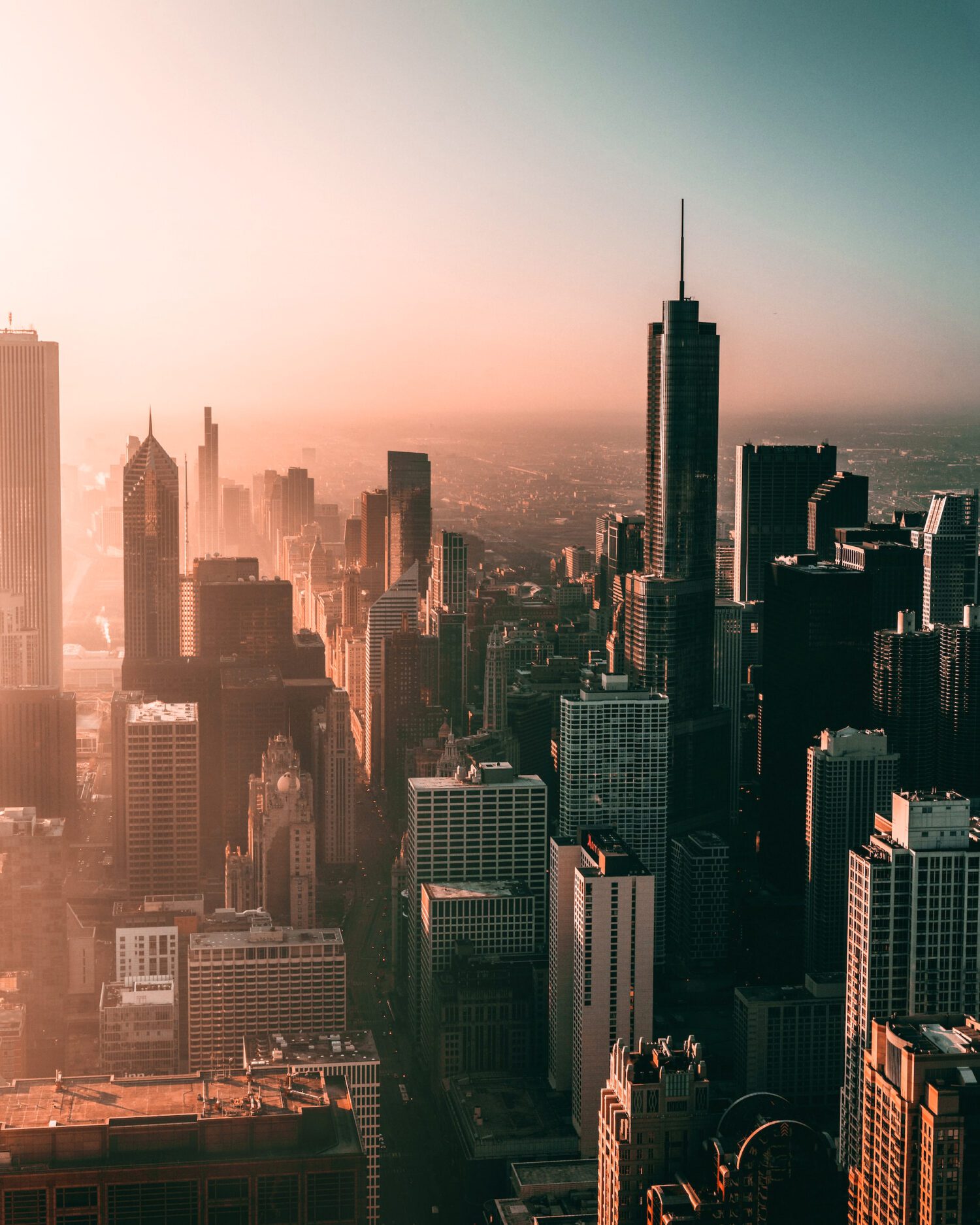
The old version of this article had the right building at No. 1 but the wrong order below it. St. Regis Chicago is third, not Aon Center. The list also repeated John Hancock Center under its current address, 875 North Michigan Avenue, and included Joffrey Tower in a position it does not hold. A height table is only useful when every building is measured by the same standard, so this revision uses one current source and one category throughout.
Is Willis Tower the tallest building in the United States?
No. It is the third-tallest completed building in the United States by architectural height, behind One World Trade Center and Central Park Tower in New York City. It is still the tallest in Chicago and the tallest U.S. building outside New York.
This is another reason old articles can be misleading. Willis Tower was once America’s tallest, and it held that position for decades. Today’s ranking is different. For the New York side of the comparison, I have a separate guide to the tallest building in New York.
From Sears Tower to Willis Tower
The tower began with a practical corporate problem rather than a desire to create a monument. In the late 1960s, Sears, Roebuck and Company was the world’s largest retailer and had employees spread across the Chicago area. It wanted a headquarters large enough to consolidate operations while leaving upper floors available for tenants until the company needed them.
Sears selected a site at the western edge of the Loop, close to commuter rail stations and expressways. The company hired Skidmore, Owings & Merrill, where architect Bruce Graham and structural engineer Fazlur Rahman Khan developed the design. Construction began in 1970. Employees started moving into the building in 1973, while the Council on Vertical Urbanism database records 1974 as the formal completion year.
That small date distinction explains why some histories say the tower was completed in 1973 and others say 1974. It was open and functioning in 1973; the standard building database uses 1974. The more important historical point is that the new Sears Tower overtook New York’s World Trade Center and became the world’s tallest building.
Nearly 25 years as the world’s tallest building
Willis Tower held the world title until 1998, when the Petronas Towers in Kuala Lumpur took first place by architectural height. The change provoked an argument that still helps explain how building rankings work. The Petronas spires counted as architecture, while the Sears Tower antennas did not. Sears Tower retained advantages in other categories, including height to the highest occupied floor, but lost the official architectural-height title.
The debate was not really about whether one structure existed higher in the sky. It was about agreeing on a repeatable measurement. Without categories, every developer could choose the part of a tower that produced the most flattering number.
Why is it called Willis Tower?
Sears eventually moved out and sold the property, but the Sears Tower name remained embedded in Chicago. In 2009, the insurance broker Willis Group leased office space and obtained naming rights. The building officially became Willis Tower on 16 July of that year.
Many Chicagoans never accepted the change in ordinary speech. “Sears Tower” is not a different building or an outdated location; it is the former name of Willis Tower and still a strong local habit. Search engines and maps understand both. If someone tells you to meet at Sears Tower, they mean the skyscraper at 233 South Wacker Drive.
The bundled-tube design that made the tower possible
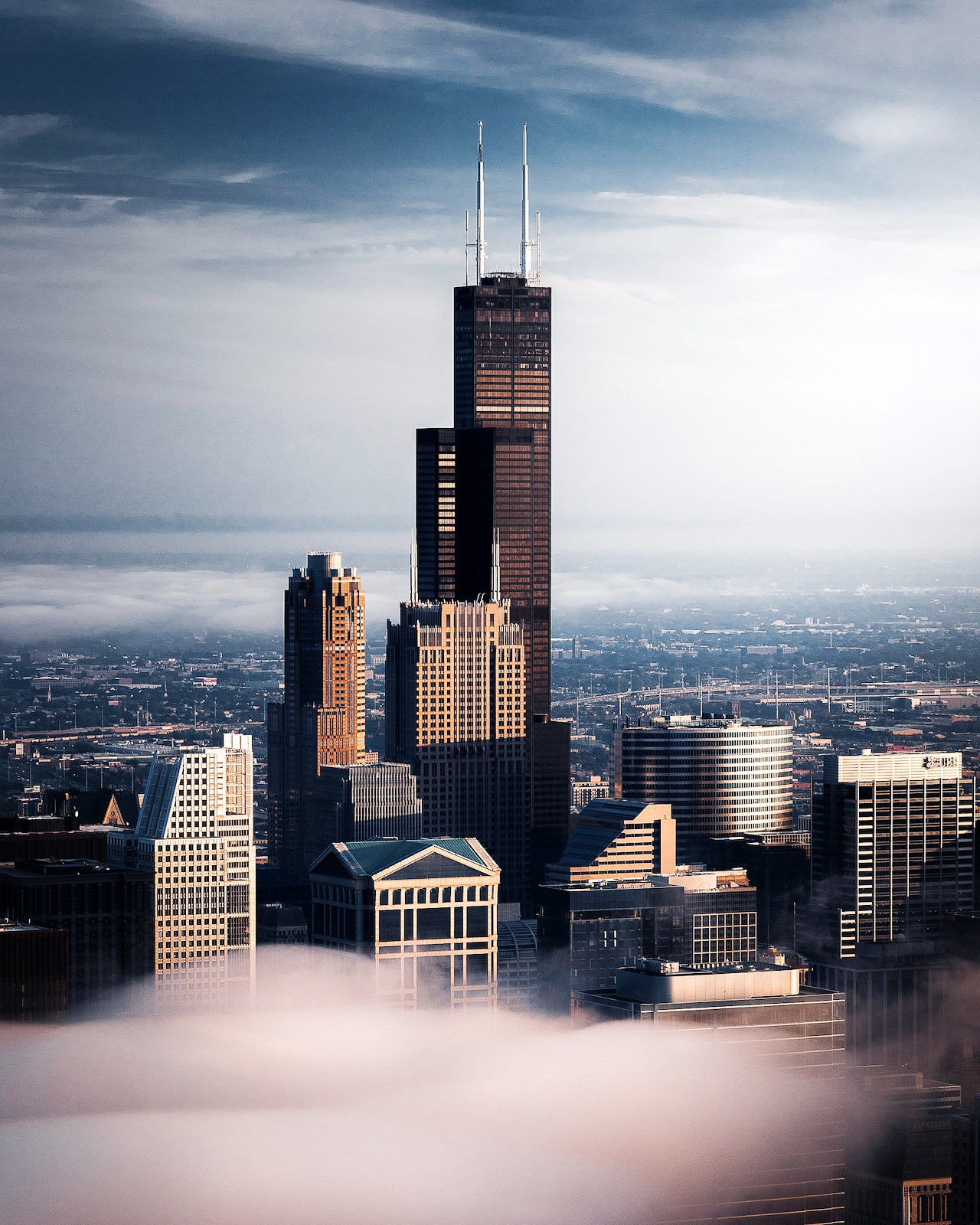
The best way to understand Willis Tower is to stop thinking of it as one giant column. Its structure begins as nine square tubes arranged in a three-by-three grid. Each tube measures 75 feet by 75 feet. Together they form a broad, rigid base; higher up, tubes end at different levels, producing the familiar setbacks.
SOM’s official project description calls this a pioneering use of bundled-tube construction. The tubes support one another and carry wind loads through the exterior frame. Because each tube is rigid, the system can create large floors without filling the interior with structural columns.
Why the tubes stop at different heights
The stepped silhouette was not applied after the engineering was finished. It grew out of Sears’ space requirements. The company needed exceptionally large floors for its own operations near the bottom, while smaller upper floors would be easier to rent to other tenants.
All nine tubes rise through the first 50 stories. Then some terminate while others continue. The remaining tubes create successively smaller floor plates until only the tallest pair reaches the top. This arrangement reduces the apparent bulk of a building with more than four million square feet of gross floor area and helps disrupt wind forces.
I find this much more satisfying than a decorative explanation. The tower looks the way it does because programme, structure and wind resistance arrived at the same answer. Once you know the nine-tube idea, the exterior stops looking random. The setbacks become a diagram you can read from the street.
The exterior is dark for a reason
Willis Tower’s near-black appearance comes from its black anodised aluminium and bronze-tinted, glare-reducing glass. Dark horizontal bands conceal mechanical floors and ventilation louvers. The result can appear almost flat under an overcast sky and sharply reflective in clear light.
The colour also separates Willis Tower from many newer Chicago skyscrapers. Blue-green curtain walls often merge with the lake and sky; Willis Tower holds its shape as a dark mass. That visual weight is one reason it remains the skyline’s anchor even when another building appears almost as tall from a particular angle.
Willis Tower today: more than an office tower
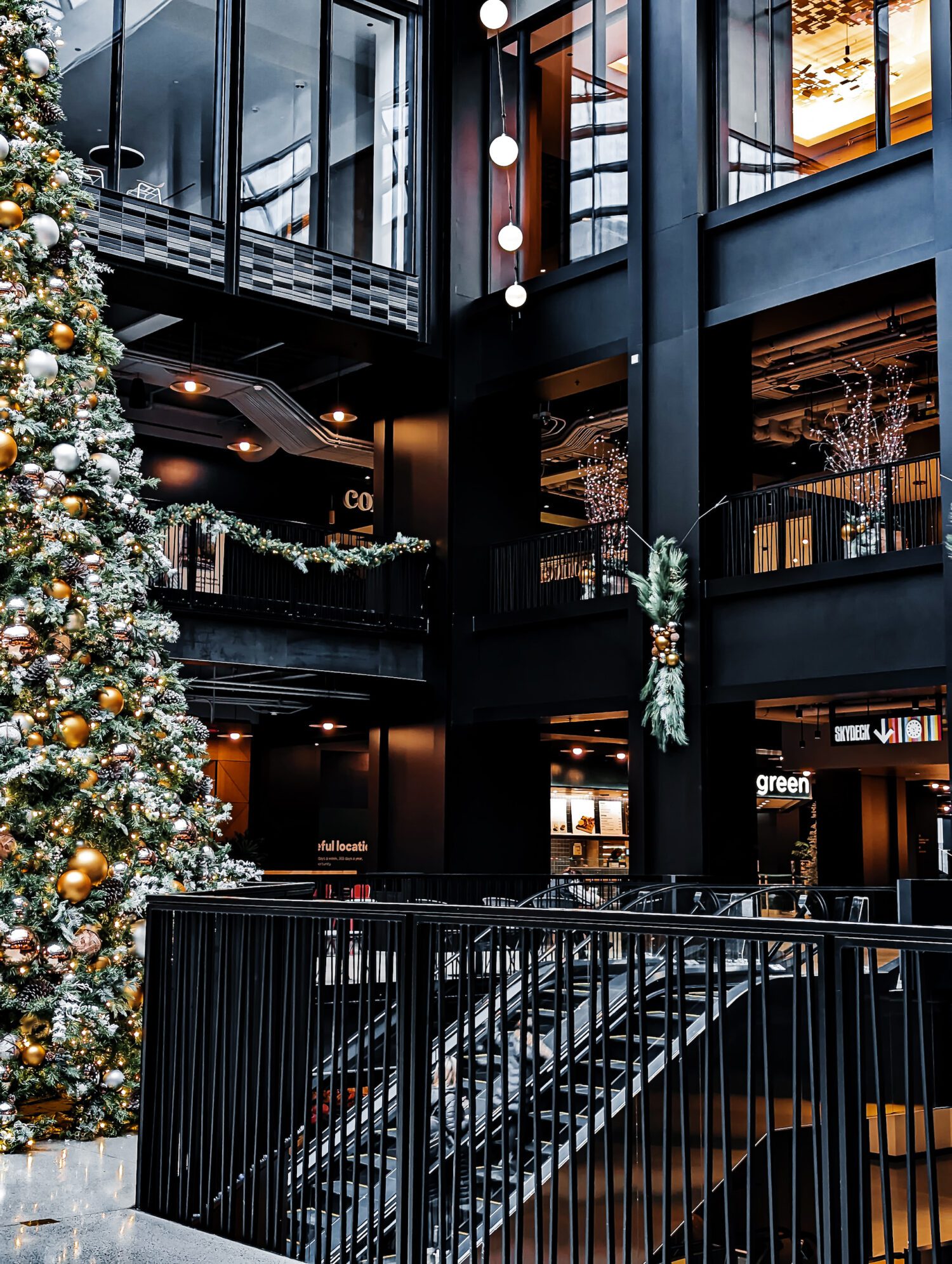
For much of its life, the tower was understood primarily as a giant office building with an observation deck at the top. A $500 million transformation begun in 2017 changed the experience at street level. The programme added and renewed public areas, retail and dining, tenant amenities, a rooftop terrace and a new Skydeck museum experience.
The base is now organised around Catalog, a name that deliberately recalls the Sears catalogue. According to Willis Tower’s official history, the five-year renovation was completed in 2022. It made the building less defensive at ground level and more connected to the neighbourhood around it.
The tower also holds LEED Platinum certification for its existing-building performance. That is worth noting because the most sustainable skyscraper is not always the newest one. Extending the useful life of an enormous existing structure, while reducing energy and water use, avoids the cost and carbon of replacing it.
Visiting Willis Tower and Skydeck Chicago
Most of Willis Tower is working office space. The public attraction is Skydeck Chicago, reached through the Jackson Boulevard entrance on the south side of the building. The observation deck occupies the 103rd floor, 1,353 feet above the street, and includes panoramic windows, an interactive Chicago museum and The Ledge glass balconies.
Practical details at a glance
| Detail | Current information |
|---|---|
| Address | Willis Tower, 233 S. Wacker Drive, Chicago, IL 60606 |
| Skydeck entrance | Jackson Boulevard, south side of the tower |
| Observation level | 103rd floor |
| Admission | Timed tickets; advance booking recommended |
| General admission checked 13 Aug. 2026 | From $32 adults, $24 ages 3–11; under 3 free |
| The Ledge | Included with general admission |
| Published summer hours | 26 May – 30 Sept.: 9 a.m.–10 p.m.; Saturday opens at 8:30 a.m. |
| Last entry | 30 minutes before closing |
| Accessibility | ADA compliant; The Ledge, ramps and elevators are accessible |
| Camera support | Tripods prohibited; monopods permitted |
| Lockers | None |
Prices and hours vary by date, season, holiday and demand. The figures above were published by Skydeck when this article was updated; use the official visit page and current ticket page for the day you plan to go.
What is The Ledge?
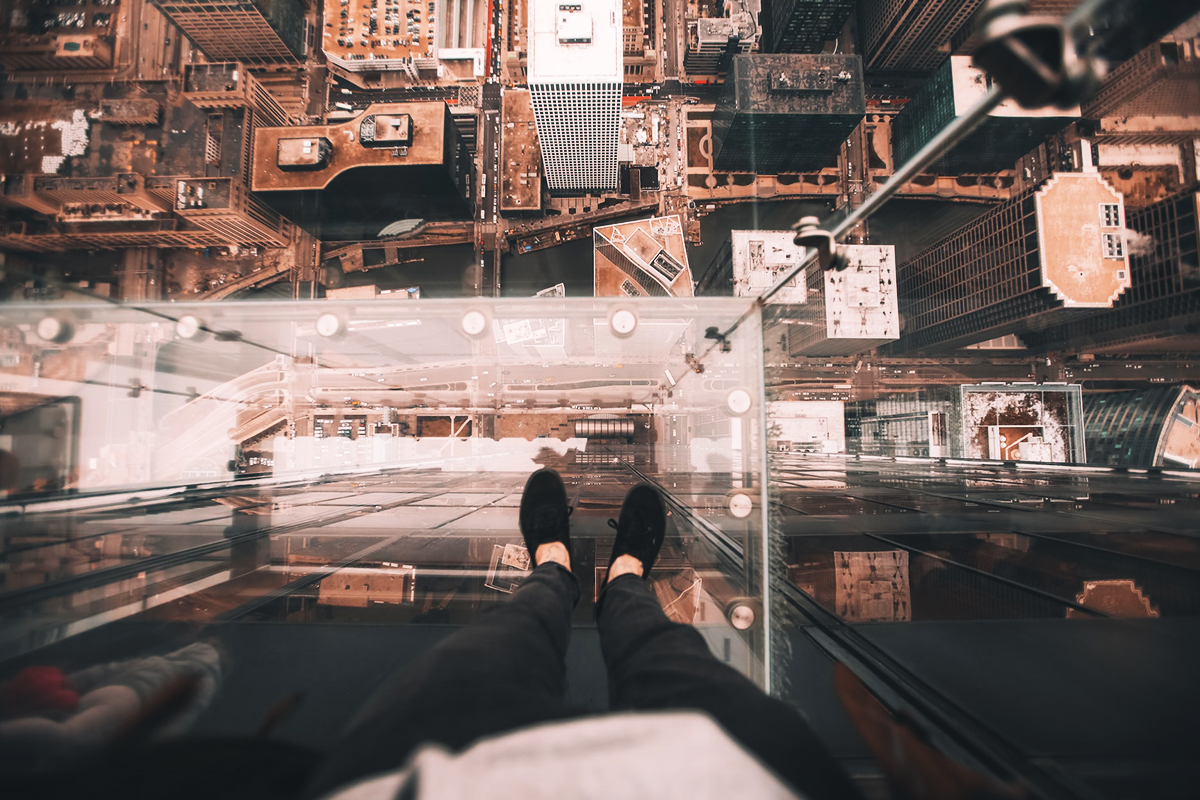
The Ledge is a group of glass boxes extending 4.3 feet beyond the façade of the 103rd floor. The transparent walls and floor place the city directly beneath the visitor rather than safely framed at a distance. Skydeck currently describes five balconies, each built from laminated glass layers.
General admission includes access, but the time inside a box is limited so the queue can move. Skydeck’s published visitor guidance allows up to 60 seconds for groups of three or fewer and 90 seconds for groups of four or more. That is enough for a quick photograph, but not enough to improvise an elaborate setup after stepping out.
My practical advice is to decide on the composition before your turn. Set the camera or phone, choose who will stand where and keep the pose simple. The view is already doing most of the work.
When is the best time to visit?
There is no single best hour because visibility, crowds and light pull in different directions.
- Opening time usually offers the simplest visit: shorter queues, cleaner windows and a better chance of clear distance before afternoon haze builds.
- Late afternoon gives the city more shape than midday light, especially when shadows begin to separate streets and towers.
- Sunset can deliver daylight, colour and city lights in one visit, but it is popular and timed slots can sell out.
- Night reduces distant detail but turns the street grid into a strong graphic pattern.
- Cloudy or low-visibility days can hide the horizon. They can also produce dramatic scenes when the tower rises through or above the cloud layer, but the result is unpredictable.
Skydeck itself recommends early morning or around sunset. I would choose opening time for the calmest first visit and sunset only when the light matters more than the crowd.
Is Skydeck worth it?
It is worth it if you want the highest public view in Chicago, want to experience The Ledge or are interested in reading the city’s street grid from above. It is less compelling if low cloud has erased the view, if heights make the experience miserable or if you want Willis Tower itself to appear in your skyline photograph. You cannot photograph a landmark from inside it.
Chicago offers another major observation deck at 875 North Michigan Avenue. Its advantage is that the view includes Willis Tower. Skydeck’s advantage is its greater height and its position over the western Loop. The better choice depends on whether you want to look from Chicago’s tallest building or photograph toward it.
Willis Tower location and map
Willis Tower occupies the block bounded by Wacker Drive, Adams Street, Franklin Street and Jackson Boulevard in Chicago’s Loop. The official address is 233 South Wacker Drive, but Skydeck visitors should follow signs to the Jackson Boulevard entrance.
The tower is within walking distance of Union Station and Ogilvie Transportation Center, which makes it convenient for visitors arriving by commuter or intercity rail. Several CTA “L” stations are also nearby. Driving is possible, but downtown parking prices and traffic make public transportation or walking the easier choice for many visitors.
Allow extra time before a timed Skydeck entry. The address covers an enormous building, and arriving at Wacker Drive does not mean you are standing at the visitor entrance.
How I would photograph Willis Tower
Willis Tower presents two opposite photographic problems. From very close, it is too large to fit comfortably into the frame. From far away, it can disappear among the rest of the skyline unless the light or composition separates it. The most successful photographs decide which problem they want to solve.
From the street: make the height feel physical
Near the base, I would use the converging verticals instead of pretending they are not there. A wide lens pointed upward exaggerates the climb and lets neighbouring façades frame the tower. The result is not a neutral architectural elevation; it is the bodily experience of standing beside something 442 metres tall.
Wacker Drive shows the tower’s breadth, while Franklin Street and Jackson Boulevard offer different relationships between the older tower and its transformed base. Move rather than relying only on zoom. A change of half a block can remove a traffic signal from the top of the building or align a neighbouring edge with one of the setbacks.
For a straighter architectural image, keep the camera level and use a wider vertical frame, then correct only modest perspective distortion in editing. Heavy correction can stretch the top of the tower and make its proportions look unnatural.
From a distance: isolate the stepped silhouette
The tower becomes easier to understand from several blocks away. A normal or short telephoto lens compresses the skyline and makes the sequence of setbacks visible. The dark façade usually gives enough contrast against a pale sky, but it can merge into surrounding buildings after sunset unless the antennas and illuminated windows remain distinct.
Good skyline viewpoints are not limited to one “secret” spot. The useful categories are more durable:
| View type | What it gives you | Main challenge |
|---|---|---|
| Chicago River and western Loop streets | Strong urban context and leading lines | Buildings can block the lower half of the tower |
| Museum Campus and lakefront viewpoints | Broad skyline with breathing room | Willis Tower appears smaller in the frame |
| Elevated viewpoints in another skyscraper | Clear relationship among the tallest buildings | Reflections and admission restrictions |
| West or southwest of the Loop | Direct reading of Willis Tower’s full mass | Foreground can become visually untidy |
| Immediately below the tower | Maximum sense of scale | Severe perspective convergence |
I prefer a view that keeps enough surrounding city to prove the scale. A tightly cropped tower can be impressive, but one neighbouring building or recognisable piece of street infrastructure helps the viewer understand what 1,451 feet actually means.
Photographing through Skydeck glass
The official Skydeck photography guidance makes one restriction clear: tripods are not allowed, although monopods are permitted. In practice, reflections are a bigger problem than camera shake during the day.
- Turn off the flash. It cannot light a city hundreds of metres away and will create a bright reflection in the window.
- Hold the lens close to the glass without striking it. Shield the sides with a hand or dark cloth.
- Wear dark clothing if possible; bright shirts are surprisingly visible in the reflection.
- Use a lens hood only if it can sit flat against the window. A rigid petal hood can leave gaps and introduce reflections.
- Clean the phone or lens before your timed Ledge turn. There is no room for a long setup.
- A circular polariser can reduce some reflections in daytime, but it also removes light and can produce uneven skies through treated or laminated glass. Rotate it while watching the actual effect.
- For night photographs, stabilise the camera against your body or a permitted monopod and use several frames. Avoid leaning equipment against a surface where staff prohibit it.
Light, weather and focal length
Willis Tower can look blue-grey, bronze or nearly black depending on the sky. Flat cloud simplifies the façade and suits graphic compositions. Hard sun creates reflections but can leave one side almost featureless. Low evening light warms nearby buildings while the tower remains dark, producing natural separation.
A practical lens range for the exterior is 24–70mm on a full-frame camera, or its equivalent. An ultra-wide lens helps directly below the tower; a 70–200mm lens is useful from the lakefront or another distant viewpoint. On a phone, the main camera usually gives cleaner detail than extreme digital zoom. Use the ultra-wide camera only when the building genuinely will not fit.
A note on Instagram hashtags
Hashtags cannot rescue an indistinct photograph, and generic tags such as #travel are too broad to provide meaningful context. I would keep the caption specific and use a small group of accurate tags if they help identify the place:
#WillisTower #SearsTower #SkydeckChicago #ChicagoArchitecture #ChicagoSkyline
The name “Sears Tower” is useful here because it reflects how people still search for and talk about the building. It is not keyword stuffing when it supplies a genuine alternate name.
What can you see from Willis Tower?
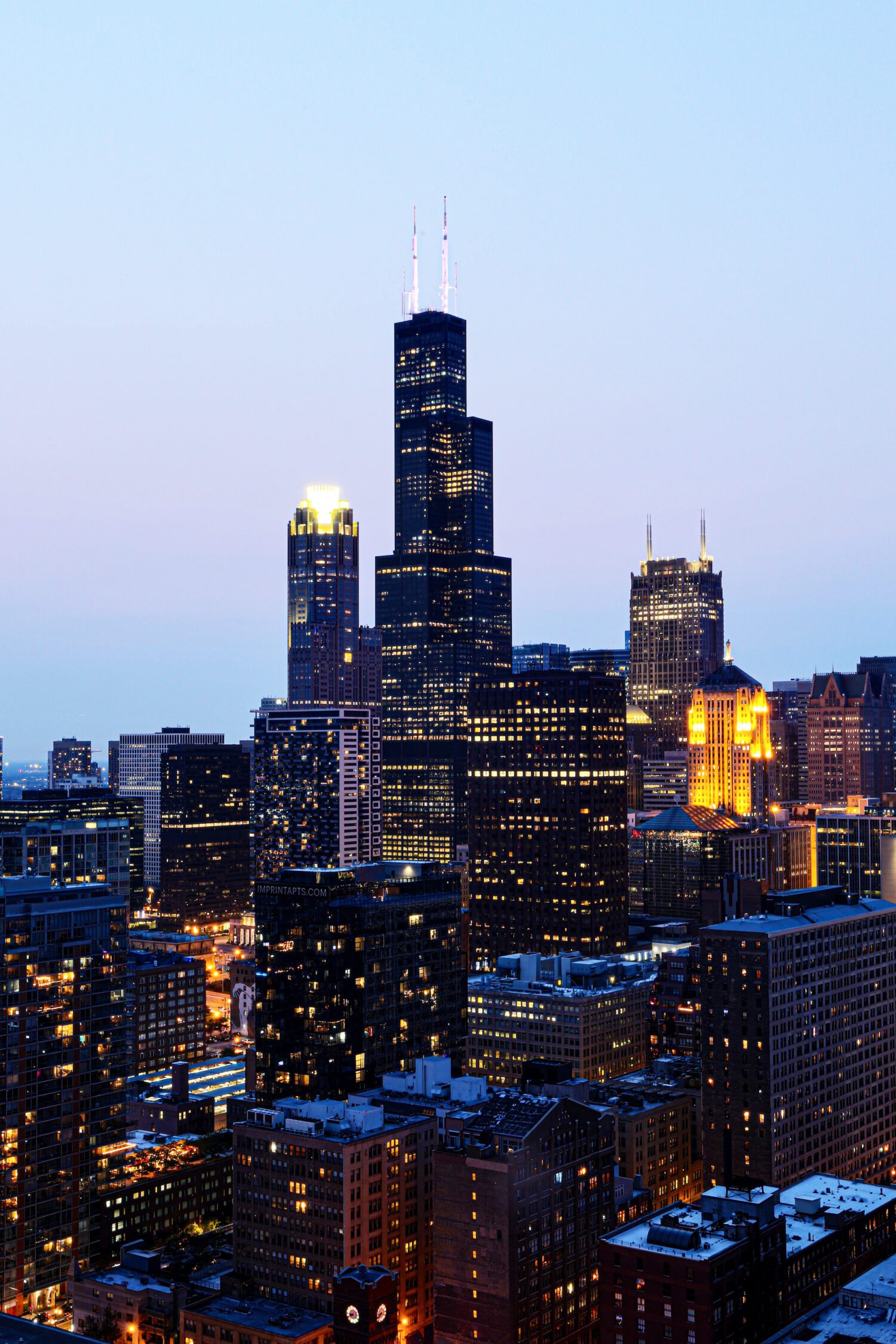
Skydeck offers a 360-degree view over the Loop, Lake Michigan, the Chicago River, rail yards and the street grid extending west. On a very clear day, the official visitor material says visibility can reach about 50 miles and parts of four states may be visible: Illinois, Indiana, Wisconsin and Michigan.
That claim describes ideal conditions, not a guarantee. Humidity, haze, rain, snow and low cloud can reduce the view to a small part of downtown. Lake Michigan often blends with the sky at the horizon, and distant land can be difficult to identify without the deck’s displays.
The most revealing view is not necessarily the farthest one. Looking down shows how the river, elevated railway, expressways and rectilinear blocks fit together. From street level Chicago can feel like a sequence of canyons; from the 103rd floor it becomes a plan.
Willis Tower compared with famous landmarks
Comparisons are useful only when the same kind of height is used. The table below uses architectural height for buildings and the commonly published total structural height for the Eiffel Tower.
| Landmark | Height | Comparison with Willis Tower |
|---|---|---|
| Burj Khalifa, Dubai | 828 m / 2,717 ft architectural | 385.9 m / 1,266 ft taller |
| One World Trade Center, New York | 541.3 m / 1,776 ft architectural | 99.2 m / 325 ft taller |
| Central Park Tower, New York | 472.4 m / 1,550 ft architectural | 30.3 m / 99 ft taller |
| Willis Tower, Chicago | 442.1 m / 1,451 ft architectural | — |
| Trump International Hotel & Tower, Chicago | 423.2 m / 1,389 ft architectural | 18.9 m / 62 ft shorter |
| Eiffel Tower, Paris | 330 m / 1,083 ft to tip | 112.1 m / 368 ft shorter than Willis Tower’s architectural height |
The Eiffel Tower comparison is not a building-ranking comparison because the Eiffel Tower is an observation and communications structure rather than an occupied building with usable floors through most of its height. It is still a helpful scale reference. I have a separate visual guide to photos of the Eiffel Tower if that is the landmark you are comparing.
Frequently asked questions about Chicago’s tallest building
What is the tallest building in Chicago right now?
Willis Tower is the tallest completed building in Chicago. Its official architectural height is 1,451 feet, or 442.1 metres.
Is Sears Tower the same as Willis Tower?
Yes. Sears Tower was the building’s original and long-standing name. It was officially renamed Willis Tower in 2009, but many Chicagoans still use the Sears Tower name.
How tall is Willis Tower with the antennas?
The tower reaches 1,729 feet, or 527 metres, at the highest antenna tip. The antennas are excluded from the 1,451-foot architectural height used for official building rankings.
How many floors does Willis Tower have?
The building describes itself as 110 stories. The Skyscraper Center’s standardised database counts 108 above-ground floors and three below ground. The difference comes from floor-counting conventions, not from a physical change to the tower.
What floor is Skydeck Chicago on?
Skydeck is on the 103rd floor, at approximately 1,353 feet above street level. The Ledge glass boxes extend from this level.
Can you visit the top of Willis Tower for free?
No. Public access to the Skydeck and The Ledge requires a ticket. General admission prices started at $32 for adults and $24 for children ages 3–11 when this article was updated on 13 August 2026; children under three were free. Prices vary by date and availability.
Do Skydeck tickets include The Ledge?
Yes. Skydeck states that all general admission tickets include The Ledge, the main observation area and the Chicago museum experience.
Can I bring a tripod to Skydeck?
No. Skydeck’s visitor guidance says tripods are prohibited. Monopods are permitted. Rules can change, so check the official policy before bringing camera support equipment.
Is Willis Tower taller than the Eiffel Tower?
Yes. Willis Tower’s architectural height is 442.1 metres, while the Eiffel Tower reaches about 330 metres to its tip. Willis Tower is approximately 112 metres taller even before its antennas are included.
Is Willis Tower taller than Burj Khalifa?
No. Burj Khalifa’s architectural height is 828 metres, almost 386 metres taller than Willis Tower’s 442.1 metres.
Why does Willis Tower look black?
Its exterior uses black anodised aluminium and bronze-tinted glass. Dark bands also conceal mechanical floors and ventilation areas, reinforcing the tower’s nearly black appearance.
How long was Willis Tower the tallest building in the world?
It held the recognised world title for nearly 25 years, from the early 1970s until 1998. The Petronas Towers then surpassed it in the architectural-height category.
What is the second-tallest building in Chicago?
Trump International Hotel & Tower is second at 423.2 metres, or 1,389 feet, by architectural height. Willis Tower is 18.9 metres, or 62 feet, taller.
Is Willis Tower still the tallest building outside New York in the United States?
Yes. At the August 2026 update, the two taller U.S. buildings were both in New York City: One World Trade Center and Central Park Tower.
Final thoughts
Willis Tower is the tallest building in Chicago, but the bare ranking explains only part of its importance. The more durable achievement is the idea inside the silhouette: nine structural tubes bundled together, serving different floor sizes, resisting wind and stopping at different heights. The building’s form is its engineering made visible.
I still see the dark, Batman-like tower that first caught my attention. Now I also see why it has lasted as Chicago’s skyline anchor. Newer towers may be smoother, brighter or more luxurious, but Willis Tower remains direct. At 1,451 feet, or 442.1 metres, it is not merely the city’s tallest completed building. It is one of the clearest explanations of how a skyscraper can stand tall at all.